
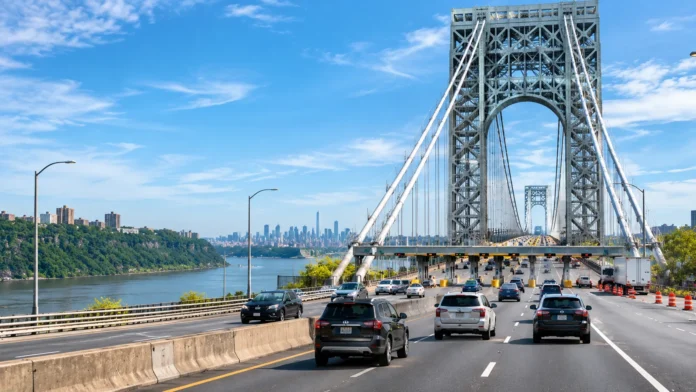
The George Washington Bridge is one of the busiest transportation links between New Jersey and New York City. Thousands of drivers use this famous Hudson River crossing for commuting, business trips, deliveries, and everyday travel. Understanding the George Washington Bridge toll can help motorists estimate travel expenses, choose convenient payment methods, and avoid unexpected charges.
The bridge uses a cashless toll collection system, meaning drivers do not need to stop at traditional toll booths. However, charges depend on vehicle type, payment method, and travel time. This guide explains the 2026 George Washington Bridge toll rates, E-ZPass discounts, payment options, peak hours, and practical tips for crossing the bridge.
What Is the George Washington Bridge Toll?
The George Washington Bridge toll is a transportation fee charged to eligible vehicles traveling eastbound from New Jersey into New York. The bridge connects Fort Lee, New Jersey, with the Washington Heights neighborhood of Manhattan. Operated by the Port Authority of New York and New Jersey, it provides an important connection for Interstate 95 and regional traffic.
Toll revenue helps support transportation infrastructure, including maintenance, improvements, and operations across the Port Authority’s facilities. The amount charged depends on several factors, including the vehicle classification and payment method. Passenger cars generally pay less than large commercial trucks, while qualifying E-ZPass customers can receive lower rates than drivers using Tolls by Mail.
The toll collection process is electronic, allowing vehicles to travel through designated lanes without stopping to exchange money. Electronic equipment reads eligible E-ZPass tags or captures license plate information for billing. Understanding these payment arrangements before crossing can help drivers avoid confusion and manage their transportation expenses more effectively.
George Washington Bridge Toll Rates in 2026
As of November 2026, the standard George Washington Bridge toll for a two-axle passenger car with a qualifying New York or New Jersey E-ZPass is $14.79 during off-peak hours. The peak-hour rate is $16.79, while the Tolls by Mail rate is $23.30. These rates took effect on January 4, 2026.
Drivers with qualifying NY/NJ E-ZPass accounts may also encounter a mid-tier rate of $19.55 when their tag is not properly read but their registered license plate identifies the account. This rate is higher than the standard E-ZPass charge but lower than Tolls by Mail. Properly mounting the transponder helps drivers receive the appropriate discount.
The standard rates above apply to ordinary passenger cars, not every vehicle crossing the bridge. Motorcycles, commercial trucks, vehicles with additional axles, and certain eligible vehicles have different classifications. Because toll schedules can change, checking the Port Authority’s current rate information before traveling is the most reliable way to confirm your expected charge.
Is the George Washington Bridge Toll Charged Both Ways?
The George Washington Bridge toll is collected only when traveling eastbound from New Jersey into New York. Drivers heading westbound from Manhattan toward New Jersey do not pay a Port Authority bridge toll. This one-direction collection system has been in place for many years and remains an important detail when calculating round-trip travel expenses.
For example, someone traveling from Fort Lee into Manhattan will pay the applicable eastbound toll. When that driver returns to New Jersey using the same bridge, there is no additional George Washington Bridge toll. However, other toll roads or transportation facilities used along the journey may have separate charges.
Understanding the direction of toll collection can help drivers plan routes and estimate expenses more accurately. Travelers should remember that a toll-free westbound crossing does not mean the entire return journey is free. Fuel costs, parking charges, and tolls on connecting highways can still affect the overall cost of transportation.
How to Pay the George Washington Bridge Toll
The George Washington Bridge uses electronic toll collection instead of cash payments at traditional toll booths. Drivers can pay through a compatible E-ZPass account or receive a Tolls by Mail invoice based on license plate information. The system allows traffic to continue moving without requiring motorists to stop and complete a manual payment.
E-ZPass is generally the most convenient option for frequent drivers because charges are automatically deducted from their accounts. A properly installed transponder communicates with roadside equipment as the vehicle passes through the tolling area. Customers should maintain sufficient account funds and keep their vehicle registration details updated to prevent billing problems.
Drivers without E-ZPass can still cross the bridge through the cashless payment system. Cameras capture their license plate information, and an invoice is generally mailed to the registered vehicle owner. Because the Tolls by Mail rate is higher, regular commuters may benefit from reviewing available E-ZPass account options before making repeated trips.
How E-ZPass Works on the George Washington Bridge
E-ZPass is an electronic toll payment system used across many roads, bridges, and tunnels in the northeastern United States. When a vehicle approaches an electronic tolling point, equipment attempts to read its transponder. The toll is then charged to the account associated with the tag according to applicable rates and account eligibility.
For the George Washington Bridge, discounted passenger-car rates generally require an eligible E-ZPass account issued through New York or New Jersey. Having an E-ZPass from another state does not automatically guarantee the same discounted rate. Drivers should review their account provider’s toll arrangements before assuming they qualify for local discounts.
Correct transponder installation is also important for receiving the expected charge. A poorly positioned or unreadable tag may cause the system to identify the vehicle through its license plate instead. Maintaining an accurate account balance, registering the correct plate, and following mounting instructions can help avoid unexpected higher charges.
Peak and Off-Peak Toll Hours Explained
George Washington Bridge toll rates vary according to the time of day for qualifying E-ZPass customers. Peak hours generally run from 6 a.m. to 10 a.m. and 4 p.m. to 8 p.m. on weekdays. During these periods, regular commuter traffic often increases, and the higher passenger-car E-ZPass rate applies.
Weekend peak hours follow a different schedule, running from 11 a.m. to 9 p.m. on Saturdays and Sundays. Other times generally qualify as off-peak for standard passenger-car E-ZPass pricing. Drivers should not assume every weekend crossing receives the lower rate because daytime and evening trips may fall within the peak period.
For example, a qualifying passenger car crossing eastbound at 7 a.m. on a weekday would normally pay the peak E-ZPass toll. The same vehicle crossing at 11 a.m. on a weekday would generally qualify for the lower off-peak rate. Tolls by Mail customers do not receive these standard time-based discounts.
George Washington Bridge Toll for Trucks and Commercial Vehicles
Commercial vehicles typically pay higher George Washington Bridge tolls because charges depend on vehicle classification and the number of axles. Large trucks generally create different infrastructure demands from passenger cars, which is reflected in the toll schedule. Rates also vary according to payment method and applicable peak, off-peak, or overnight periods.
Truck operators should review the Port Authority’s commercial toll classifications before planning a crossing. A vehicle with additional axles or a trailer may face a significantly higher charge than a standard passenger car. Fleet managers can reduce billing confusion by ensuring that each commercial vehicle has the correct account classification and registered information.
The bridge also has specific restrictions regarding vehicle size, weight, and permitted travel levels. Large commercial trucks must follow the applicable roadway and bridge regulations, including restrictions affecting the lower level. Checking official truck guidance before departure helps drivers select appropriate routes and avoid preventable transportation difficulties.
What Happens If You Cross Without E-ZPass?
Drivers without an E-ZPass transponder can legally cross the George Washington Bridge using the cashless tolling system. Roadside cameras record license plate information when a vehicle travels through the toll collection area. The registered owner generally receives a Tolls by Mail invoice containing the amount due and instructions for completing payment.
For a standard passenger car, the 2026 Tolls by Mail charge is $23.30 for an eastbound crossing. This is higher than the discounted peak and off-peak rates available to qualifying E-ZPass customers. Drivers should therefore account for the increased expense when planning regular travel between New Jersey and New York.
After receiving an invoice, drivers should review the vehicle information, travel date, and payment deadline carefully. Payments should be completed through the authorized toll payment system using the instructions provided. Ignoring an invoice or missing its deadline can result in additional fees and collection-related problems under the applicable tolling rules.
How to Check and Pay an Unpaid Bridge Toll
If you believe you have an unpaid George Washington Bridge toll, begin by reviewing your E-ZPass account or any Tolls by Mail correspondence. Look for the crossing date, vehicle license plate, and transaction amount. Comparing these details with your travel history can help determine whether a charge is correct or requires additional investigation.
Drivers who receive a Tolls by Mail notice can generally use the official payment instructions to settle the outstanding balance. Depending on the available service, payment may be possible online, by mail, or through another authorized channel. Always verify that you are using an official toll payment platform rather than an unfamiliar third-party website.
If an invoice contains incorrect information, contact the appropriate toll customer service provider for assistance. Keep copies of payment confirmations, account statements, and relevant correspondence until the matter is resolved. Acting promptly can help prevent unnecessary penalties and make it easier to correct billing errors or disputed transactions.
George Washington Bridge Traffic and Travel Times
Traffic conditions on the George Washington Bridge can vary significantly depending on the day, weather, and surrounding highway activity. Morning and evening commuter periods often bring heavy congestion, especially on routes approaching Manhattan. Accidents, construction work, and special events can also cause delays that extend beyond the bridge itself.
The bridge has an upper level and a lower level, giving drivers different roadway options under normal operating conditions. However, lane closures, vehicle restrictions, and traffic patterns can affect which route is available. Following current electronic signs and official traffic guidance is more reliable than assuming one level will always provide a faster crossing.
Checking real-time traffic information before departure can help drivers choose a suitable travel period. Navigation applications may provide estimated delays and suggest alternative routes when congestion becomes severe. Leaving additional time for important appointments is especially useful because Hudson River crossings can experience unpredictable traffic throughout the day.
How to Save Money on George Washington Bridge Tolls
Using an eligible New York or New Jersey E-ZPass account is one of the most effective ways to reduce the George Washington Bridge toll. Qualifying drivers pay less than the standard Tolls by Mail rate. Before opening an account, compare its terms, payment requirements, and any applicable fees to determine whether it suits your travel needs.
Traveling during off-peak hours can provide additional savings for eligible passenger-car E-ZPass users. The difference between peak and off-peak pricing is $2 per crossing under the 2026 schedule. Drivers with flexible schedules can consider traveling outside busy periods, although safety, convenience, and travel commitments should remain important considerations.
Combining several errands into one trip may also help reduce transportation expenses by avoiding unnecessary eastbound crossings. Carpooling can distribute travel costs among passengers when practical, while public transportation may be more economical for certain journeys. Comparing tolls, parking, fuel, and transit fares provides a clearer picture of the most affordable option.
George Washington Bridge vs. Other Hudson River Crossings
The George Washington Bridge is one of several major routes connecting New Jersey with New York City. Other important crossings include the Lincoln Tunnel and Holland Tunnel, which serve different areas of Manhattan. Choosing the most practical crossing depends on your destination, starting location, traffic conditions, and preferred route through the metropolitan area.
The Port Authority generally applies the same standard toll schedule to the George Washington Bridge, Lincoln Tunnel, and Holland Tunnel. Therefore, selecting a different Port Authority crossing does not automatically reduce the standard passenger-car toll. However, a better route may reduce driving distance, fuel consumption, or time spent in traffic.
For travelers heading toward northern Manhattan or the Bronx, the George Washington Bridge may provide a convenient connection. Drivers traveling toward Midtown or Lower Manhattan may find one of the tunnels more suitable. Reviewing the complete route before departure helps prevent unnecessary detours and ensures that transportation decisions match the intended destination.
Common George Washington Bridge Toll Mistakes to Avoid
One common mistake is assuming that every E-ZPass account qualifies for the same discounted toll. The lowest standard passenger-car rates generally apply to qualifying New York and New Jersey accounts. Drivers using transponders issued elsewhere should verify the applicable pricing rather than relying on rates advertised for local customers.
Another mistake involves forgetting to update account information after changing vehicles or license plates. Incorrect registration details can prevent the tolling system from matching a vehicle to the correct account. Keeping contact information, payment methods, and transponder details current reduces the risk of billing confusion or unexpected invoices.
Drivers should also avoid assuming that the lower off-peak rate applies throughout the weekend. Saturday and Sunday have designated peak periods, and toll charges depend on the actual crossing time. Reviewing the rate schedule, checking account transactions, and paying invoices promptly can help prevent avoidable transportation expenses.
Useful Tips Before Crossing the George Washington Bridge
Before traveling, confirm your route, review traffic conditions, and estimate the expected toll based on your vehicle and payment method. Drivers using E-ZPass should verify that their account is active and their transponder is properly installed. These simple preparations can make the crossing more predictable and reduce unexpected billing issues.
Allow extra travel time during busy commuting periods, holidays, and major public events. Heavy congestion can develop on surrounding highways even when the bridge itself remains open. Following posted signs, maintaining appropriate driving distances, and avoiding sudden lane changes can contribute to a safer journey through heavily traveled approaches.
Visitors unfamiliar with New York City should also research parking arrangements and local roadway restrictions before departure. Depending on the destination, additional tolls or Manhattan congestion pricing charges may apply beyond the bridge crossing. Understanding the complete transportation cost helps travelers budget accurately and select the most convenient route.
Conclusion
The George Washington Bridge toll is an important travel expense for drivers entering New York from New Jersey. In 2026, standard passenger-car charges range from $14.79 for qualifying off-peak E-ZPass travel to $23.30 through Tolls by Mail. Understanding payment methods and toll schedules can help motorists avoid unexpected costs.
Since the bridge uses cashless tolling, drivers should maintain accurate E-ZPass information or pay mailed invoices within the required period. Remember that Port Authority tolls are collected only in the eastbound direction. Commercial vehicles and other vehicle classes may have different rates, making official rate verification especially important.
Planning ahead can make crossing the George Washington Bridge easier, more affordable, and less stressful. Checking traffic conditions, choosing convenient travel times, and using eligible electronic toll discounts can improve the overall experience. With the right information, drivers can travel between New Jersey and New York with greater confidence.
Frequently Asked Questions
How much is the George Washington Bridge toll in 2026?
The standard passenger-car toll is $14.79 off-peak or $16.79 during peak hours with qualifying NY/NJ E-ZPass. Drivers using Tolls by Mail pay $23.30 for an eastbound crossing.
Is the George Washington Bridge toll charged in both directions?
No, the George Washington Bridge toll is charged only when traveling eastbound from New Jersey into New York. Drivers returning westbound toward New Jersey do not pay a Port Authority bridge toll.
Can you pay cash at the George Washington Bridge?
No, the George Washington Bridge no longer accepts cash toll payments. Drivers use electronic E-ZPass payment or receive a Tolls by Mail invoice based on their vehicle’s registered license plate.
What time is the George Washington Bridge toll cheaper?
Qualifying E-ZPass customers receive lower rates outside designated peak hours. Weekday peaks are 6–10 a.m. and 4–8 p.m., while weekend peaks run from 11 a.m. to 9 p.m.
What happens if you do not pay the George Washington Bridge toll?
Unpaid toll invoices can lead to additional fees and collection actions under applicable rules. Drivers should review their notices, pay before the deadline, or contact the toll provider to resolve billing disputes.