
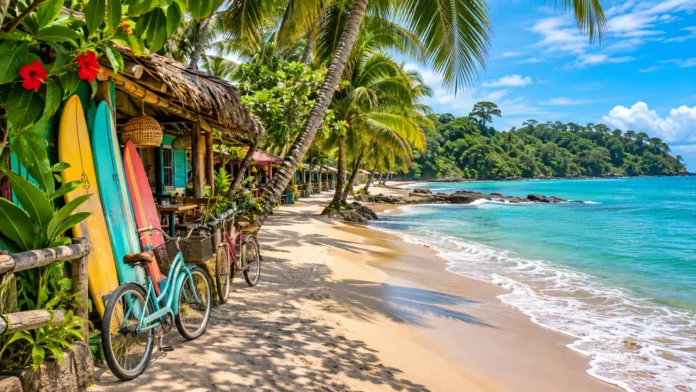
Puerto Viejo Costa Rica is a beautiful Caribbean destination known for tropical beaches, lush rainforests, and a relaxed coastal atmosphere. Located in the Limón Province, this colorful town offers a memorable combination of natural attractions, local culture, and outdoor adventures. Visitors can enjoy peaceful beaches, delicious Caribbean food, and fascinating wildlife throughout the surrounding area.
For first-time travelers, Puerto Viejo provides a different experience from Costa Rica’s popular Pacific coast destinations. Its vibrant Afro-Caribbean heritage, friendly communities, and laid-back lifestyle create a welcoming environment. Whether you want to explore national parks, discover hidden beaches, or simply relax beside the ocean, this guide will help you plan an enjoyable visit.
Where Is Puerto Viejo Costa Rica Located?
Puerto Viejo de Talamanca is located along Costa Rica’s southern Caribbean coast in Limón Province. This tropical destination sits between the Caribbean Sea and the forested landscapes of the Talamanca region. The town is approximately 220 kilometers from San José by road. Its coastal location provides easy access to beautiful beaches, wildlife reserves, and traditional Caribbean communities.
Unlike the busy resorts found in other parts of Costa Rica, Puerto Viejo offers a more relaxed atmosphere. Colorful buildings, small restaurants, and local shops line its lively streets. Visitors frequently travel by bicycle while enjoying ocean views and tropical surroundings. This combination of nature and local culture makes the town particularly appealing to travelers seeking an authentic coastal experience.
The surrounding region includes popular destinations such as Playa Cocles, Punta Uva, Cahuita, and Manzanillo. Each location offers different opportunities for relaxation, wildlife observation, and outdoor activities. Traveling between these places allows visitors to experience the diversity of Costa Rica’s Caribbean coastline. Puerto Viejo serves as a convenient base for exploring these nearby attractions.
Why Puerto Viejo Is Worth Visiting
One of the biggest reasons to visit Puerto Viejo Costa Rica is its beautiful combination of beaches and rainforest. Tall palm trees grow beside golden sand, while tropical vegetation creates a peaceful coastal environment. Visitors may encounter monkeys, sloths, and colorful birds in surrounding natural areas. These experiences make the destination especially attractive to nature enthusiasts.
Puerto Viejo also has a rich cultural identity influenced by Afro-Caribbean traditions and Indigenous communities. Music, local cooking, and traditional celebrations reflect the region’s diverse history. Travelers can discover authentic Caribbean flavors while learning about the people who call this area home. Exploring these traditions adds cultural depth to a beach-focused vacation.
Another appealing feature is the town’s slower pace of life. Instead of spending every day following a crowded sightseeing schedule, visitors can explore at their own speed. Cycling between beaches, enjoying fresh tropical fruit, and relaxing beneath palm trees are popular activities. This welcoming atmosphere makes Puerto Viejo suitable for both short vacations and longer tropical escapes.
Best Time to Visit Puerto Viejo Costa Rica
September and October are often considered excellent months to visit Puerto Viejo because the southern Caribbean coast frequently experiences favorable weather. These months can bring calmer seas and relatively sunny conditions compared with other periods. However, tropical rainfall remains possible throughout the year. Visitors should always check local forecasts before arranging outdoor activities.
February, March, and parts of April can also offer pleasant opportunities for exploring beaches and natural attractions. Travelers may experience warm temperatures with occasional tropical showers during these months. Weather conditions can vary significantly from one week to another. Packing lightweight rain protection helps visitors remain comfortable regardless of seasonal changes.
The best time to travel ultimately depends on your preferred activities and personal schedule. Beach lovers may prioritize calmer ocean conditions, while experienced surfers often prefer periods with stronger waves. Wildlife enthusiasts can enjoy rainforest surroundings throughout the year, although some activities are seasonal. Planning with flexibility allows visitors to make the most of changing Caribbean weather.
Most Beautiful Beaches in Puerto Viejo
Playa Cocles is one of the most popular beaches near Puerto Viejo Costa Rica. Its long shoreline, palm trees, and lively atmosphere attract travelers interested in beach activities and surfing. The beach also offers beautiful scenery for walking and photography. However, strong waves and rip currents can occur, so visitors should carefully follow local safety guidance.
Punta Uva is another stunning destination known for its clear water and lush tropical surroundings. The beach features picturesque coastal scenery with palm trees extending toward the shoreline. During suitable conditions, sheltered sections may offer opportunities for swimming and snorkeling. Visitors should still assess water conditions carefully because currents and waves can change unexpectedly.
Playa Chiquita and Manzanillo provide quieter alternatives for travelers looking to escape busier areas. Playa Chiquita features smaller beach sections surrounded by dense vegetation and rocky coastal features. Manzanillo offers scenic views near the Gandoca-Manzanillo Wildlife Refuge. Exploring these beaches reveals the remarkable natural variety found along Costa Rica’s southern Caribbean coastline.
Best Things to Do in Puerto Viejo
Exploring the coastline by bicycle is one of the most enjoyable activities in Puerto Viejo. The coastal road connects several beautiful beaches, small restaurants, and tropical neighborhoods. Cycling allows visitors to experience the surrounding scenery at a comfortable pace. Wearing a helmet, staying visible, and avoiding poorly lit roads after dark make the experience safer.
Surfing is another popular attraction, particularly around Playa Cocles, where lessons may be available during suitable conditions. Beginners should choose qualified instructors and beaches appropriate for their experience level. More challenging breaks, including Salsa Brava, are intended for highly experienced surfers. Observing local ocean conditions is essential before participating in any water activity.
Visitors can also enjoy guided nature walks, local markets, and cultural experiences throughout the region. Chocolate-making tours provide insight into traditional cacao cultivation and preparation. Wildlife-focused excursions introduce travelers to rainforest plants and animals. Combining cultural activities with beach relaxation creates a balanced itinerary that highlights the area’s natural and historical attractions.
Explore Cahuita National Park
Cahuita National Park is one of the most rewarding natural attractions near Puerto Viejo Costa Rica. Located north of town, the park protects coastal rainforest, coral reef environments, and beautiful Caribbean beaches. Visitors can follow established walking trails through tropical vegetation. The combination of ocean views and wildlife makes this destination particularly appealing to first-time travelers.
Wildlife enthusiasts may encounter howler monkeys, sloths, iguanas, and various tropical birds while exploring the park. However, animal sightings depend on weather, timing, and natural behavior. Traveling with a knowledgeable local guide can help visitors identify species and understand their habitats. Maintaining a respectful distance protects both wildlife and park visitors.
The park also offers opportunities to appreciate marine environments when conditions and regulations permit. Guided snorkeling experiences may be available through authorized operators during suitable weather. Visitors should follow current park rules and avoid touching coral or disturbing marine animals. Spending several hours here provides a memorable introduction to Costa Rica’s Caribbean biodiversity.
Discover Gandoca-Manzanillo Wildlife Refuge
The Gandoca-Manzanillo Wildlife Refuge protects an important section of Costa Rica’s southern Caribbean environment. Located near Manzanillo, this protected area includes coastal forest, wetlands, marine habitats, and beautiful natural landscapes. Visitors can explore permitted trails while enjoying the sounds of tropical wildlife. Its relatively undeveloped surroundings create a peaceful escape from busy tourist areas.
Guided nature walks offer opportunities to observe monkeys, birds, reptiles, and other rainforest animals. Experienced guides can also explain how the area’s plants and ecosystems support local biodiversity. Wildlife observations are never guaranteed, making patience an important part of the experience. Visitors should remain on designated routes and avoid disturbing sensitive habitats.
The surrounding Manzanillo community adds cultural interest to a visit. Travelers can enjoy local food, admire coastal scenery, and discover the quieter atmosphere of southern Caribbean villages. Combining a refuge excursion with a relaxing beach visit makes an enjoyable day trip. Checking current access rules and trail conditions before traveling helps prevent unexpected difficulties.
Experience Puerto Viejo’s Caribbean Culture
Puerto Viejo is especially memorable because of its strong Afro-Caribbean cultural influences. Traditional music, colorful artwork, and regional food reflect generations of local history. Visitors may notice Caribbean rhythms playing in restaurants and gathering spaces throughout town. Taking time to appreciate these traditions provides a deeper understanding of the region beyond its beaches.
Food is an important part of the local cultural experience. Popular dishes include rice and beans cooked with coconut milk, Caribbean-style chicken, plantains, and fresh seafood. Regional recipes often combine aromatic spices with tropical ingredients. Trying locally prepared meals is an enjoyable way to experience the flavors that make this coastline distinctive.
Indigenous Bribri communities also contribute significantly to the cultural heritage of the surrounding Talamanca region. Community-led experiences may introduce visitors to traditional cacao practices, local knowledge, and cultural history. Choosing respectful, locally operated activities supports meaningful cultural exchange. Travelers should always follow community guidelines and avoid treating cultural traditions as staged entertainment.
Where to Stay in Puerto Viejo Costa Rica
Puerto Viejo offers accommodation options for different travel preferences and budgets. Visitors can choose from small boutique hotels, family-run guesthouses, hostels, and tropical vacation rentals. Staying near the town center provides convenient access to restaurants, shops, and local transportation. This location is particularly useful for travelers who prefer exploring without renting a car.
The Playa Cocles area is another attractive option for visitors who want to stay close to the beach. Accommodations here often feature gardens, tropical surroundings, and easy access to coastal activities. The atmosphere can feel quieter than the busiest streets of town. Travelers should check walking distances and transportation options before selecting a property.
Punta Uva and Playa Chiquita are appealing choices for people seeking peaceful natural surroundings. Some accommodations are tucked among trees, creating opportunities to observe wildlife from a respectful distance. However, these locations may require longer trips to reach central restaurants and services. Choosing the right area depends on your transportation plans and preferred vacation experience.
How to Get to Puerto Viejo and Travel Around
Most international travelers reach Puerto Viejo Costa Rica after arriving at Juan Santamaría International Airport near San José. From there, the journey typically takes around four to six hours by road, depending on traffic and conditions. Visitors can choose public buses, shared shuttles, private transfers, or rental vehicles. Planning transportation in advance is especially useful after a long international flight.
Public buses offer a budget-friendly option for travelers who prefer not to drive. Shared shuttle services usually provide more direct transportation and may include accommodation pickups or drop-offs. Renting a vehicle offers additional flexibility for exploring nearby destinations. However, travelers should check road conditions, insurance requirements, and parking availability before choosing this option.
Once in Puerto Viejo, bicycles are a popular way to explore the coastal road and nearby beaches. Taxis and local transportation services are useful for longer distances or rainy days. Some attractions are also accessible through organized guided tours. Selecting transportation based on comfort, safety, and daily activities can make the entire trip more convenient.
What to Eat and Where to Find Local Food
Food lovers will find plenty to enjoy in Puerto Viejo because its culinary scene combines Caribbean traditions with Costa Rican ingredients. Coconut rice and beans is one of the region’s most recognizable dishes. It is frequently served with seasoned chicken, fish, or plantains. The rich flavors reflect the area’s cultural heritage and tropical agricultural traditions.
Fresh fruit and locally prepared snacks are also popular throughout the town. Visitors can enjoy pineapple, papaya, bananas, and refreshing fruit drinks from local vendors. Small cafés and restaurants often serve breakfast options alongside traditional Costa Rican meals. Trying different establishments gives travelers opportunities to experience the town’s diverse food culture.
Puerto Viejo also offers vegetarian-friendly meals and international dining choices. Travelers can find casual cafés, beachfront restaurants, and family-run eateries in several neighborhoods. Prices and menu selections vary depending on location and ingredients. Choosing established establishments with good food hygiene practices helps visitors enjoy their meals comfortably throughout the vacation.
Essential Travel Tips for First-Time Visitors
Preparing for Puerto Viejo’s tropical climate can make a significant difference to your travel experience. Lightweight clothing, comfortable walking shoes, sunscreen, and insect repellent are useful essentials. A waterproof bag helps protect electronics during unexpected rain showers. Travelers should also carry drinking water when exploring beaches, parks, and other outdoor attractions.
Although Puerto Viejo is a popular tourist destination, visitors should take normal personal safety precautions. Keep valuables secure, avoid leaving belongings unattended on beaches, and use reliable transportation after dark. Ocean safety is equally important because some beaches experience strong currents. Following local advice and posted warnings helps reduce unnecessary risks.
Carrying some Costa Rican colones is useful for smaller businesses, although many tourist establishments also accept cards. Learning a few Spanish phrases can make everyday interactions easier and more enjoyable. Travelers should check mobile connectivity and keep offline maps available when exploring remote areas. These simple preparations support a smoother first visit.
Conclusion
Puerto Viejo Costa Rica is an unforgettable Caribbean destination that combines beautiful beaches, tropical wildlife, and rich cultural traditions. From the lively atmosphere of Playa Cocles to the peaceful surroundings of Punta Uva, every coastal area offers something different. Visitors can enjoy outdoor activities, discover local cuisine, and experience a relaxed lifestyle surrounded by natural beauty.
Planning your trip around weather conditions, preferred activities, and accommodation choices can make your experience more enjoyable. Exploring Cahuita National Park, visiting Manzanillo, and learning about local traditions provide excellent opportunities beyond beach relaxation. First-time visitors should allow enough time to appreciate the region instead of rushing between destinations. A flexible itinerary helps accommodate changing tropical conditions.
Whether you are planning a peaceful vacation or an adventure-filled coastal escape, Puerto Viejo offers a wonderful introduction to Costa Rica’s Caribbean side. Its welcoming atmosphere and remarkable landscapes encourage travelers to slow down and enjoy their surroundings. By respecting local communities, wildlife, and natural environments, visitors can make lasting memories while supporting responsible tourism.
Frequently Asked Questions
Is Puerto Viejo Costa Rica worth visiting?
Yes, Puerto Viejo is worth visiting for its beautiful Caribbean beaches, tropical wildlife, and distinctive local culture. It offers a relaxed atmosphere with opportunities for surfing, nature tours, cycling, and exploring nearby protected areas.
How many days should you spend in Puerto Viejo?
Three to five days is a good amount of time for first-time visitors. This allows you to explore popular beaches, visit Cahuita National Park, experience local food, and enjoy the area’s relaxed atmosphere.
What is the best month to visit Puerto Viejo Costa Rica?
September and October often provide favorable conditions along Costa Rica’s southern Caribbean coast. February and March can also be pleasant. However, rainfall occurs throughout the year, so checking weather forecasts before traveling is important.
Is Puerto Viejo Costa Rica safe for tourists?
Puerto Viejo is a popular tourist destination, but normal safety precautions are important. Visitors should secure valuables, avoid isolated areas after dark, use reliable transportation, and follow local ocean safety warnings.
Do you need a car in Puerto Viejo Costa Rica?
No, renting a car is not essential for visiting Puerto Viejo. Many travelers explore nearby beaches by bicycle or taxi. However, a vehicle can provide additional flexibility when visiting more distant attractions.