
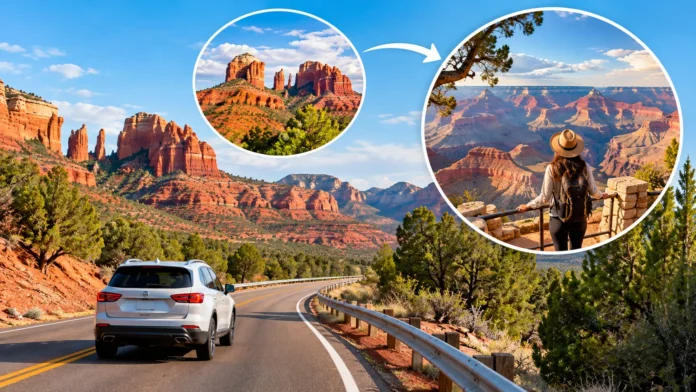
Traveling from Sedona to the Grand Canyon is one of the most memorable road trips in Arizona. The journey connects Sedona’s beautiful red rock landscapes with the enormous cliffs and breathtaking viewpoints of Grand Canyon National Park. Along the way, travelers can discover scenic highways, historic towns, and peaceful mountain scenery. This guide explains the best driving routes, distances, stops, and practical travel tips to help you plan an enjoyable trip.
How Far Is Sedona from the Grand Canyon?
The distance from Sedona to the Grand Canyon South Rim is approximately 110 to 120 miles, depending on your chosen route. Under normal driving conditions, the journey generally takes around two to two and a half hours. Traffic, road closures, and sightseeing stops can increase travel time. Starting early gives you more opportunities to explore the canyon comfortably.
Most visitors travel to the South Rim because it provides convenient access to famous viewpoints and visitor facilities. Grand Canyon Village, Mather Point, and Yavapai Point are among the popular attractions in this area. The South Rim remains open throughout the year, although weather can affect roads and services. Its accessibility makes it ideal for first-time visitors.
The North Rim is considerably farther from Sedona and requires a much longer driving journey. It also has seasonal access restrictions that make planning more complicated. For travelers with limited time, the South Rim is usually the more practical destination. Understanding these differences helps you select a route that matches your schedule and travel preferences.
Best Route from Sedona to Grand Canyon via Flagstaff
One practical Sedona to Grand Canyon driving route follows State Route 179 toward Interstate 17 northbound. From there, travelers continue to Flagstaff before taking US Highway 180 northwest toward Valle. State Route 64 then leads north toward Tusayan and the park’s South Entrance. This route combines major highways with attractive mountain landscapes and open countryside.
Flagstaff provides a convenient stopping point for fuel, refreshments, and essential supplies before continuing toward the park. The surrounding landscape features ponderosa pine forests and views of northern Arizona’s mountains. Along US Highway 180, the scenery gradually changes as the road crosses high-elevation countryside. The drive provides an enjoyable introduction to the region’s natural beauty.
This route is particularly useful when State Route 89A through Oak Creek Canyon is closed or difficult to navigate. Travelers should check current highway conditions because weather and construction can affect journey times. Navigation applications may suggest different roads depending on traffic and closures. Following official road information helps you avoid unnecessary delays and unexpected detours.
Alternative Route Through Williams and Highway 64
Another popular option for driving from Sedona to Grand Canyon is traveling through Flagstaff and Williams. Drivers can follow Interstate 17 north, connect with Interstate 40 west, and continue toward Williams. From Williams, State Route 64 runs north directly toward the South Entrance. This alternative uses major roads and passes through a historic Arizona town.
Williams is particularly famous for its connection to historic Route 66 and its traditional roadside atmosphere. The downtown area features restaurants, gift shops, and buildings that reflect the region’s travel history. Visitors can stop for a meal or explore the streets before continuing north. This makes Williams an appealing addition to a leisurely road trip.
The drive from Williams to the Grand Canyon follows a straightforward highway through forests and open landscapes. Although this route may take slightly longer than other alternatives, actual travel times vary with conditions. It is a useful choice for travelers who prefer major highways. Williams also offers accommodation options for visitors planning an overnight stay.
Scenic Route Through Oak Creek Canyon and Highway 89A
State Route 89A through Oak Creek Canyon is traditionally one of the most scenic drives between Sedona and Flagstaff. The winding highway passes towering rock formations, forested slopes, and beautiful canyon landscapes. During normal conditions, travelers can enjoy dramatic scenery as the road climbs toward higher elevations. Several designated viewpoints provide opportunities to appreciate the surroundings.
Popular locations along this corridor include Slide Rock State Park and the Oak Creek Vista area. These attractions offer opportunities to experience northern Arizona’s distinctive landscape from different perspectives. However, access to individual destinations does not necessarily mean the entire highway is open. Road conditions should always be confirmed before choosing this scenic alternative.
As of November 2026, flood damage has interrupted through travel on State Route 89A between Sedona and Flagstaff. Travelers should use State Route 179 and Interstate 17 while the closure remains in effect. Repairs and changing conditions may influence future access. Once the highway fully reopens, it can again become an attractive option for a scenic road trip.
Exploring the Grand Canyon via the East Entrance
The Grand Canyon East Entrance offers another approach for travelers interested in additional scenery and viewpoints. From Flagstaff, drivers can travel north on US Highway 89 toward Cameron. State Route 64 then continues west toward Desert View and Grand Canyon National Park. This journey is generally longer than reaching the South Entrance directly.
Desert View is a memorable introduction to the eastern portion of the South Rim. The area features expansive canyon scenery and the historic Desert View Watchtower. Visitors can admire distant rock formations and, from suitable viewpoints, sections of the Colorado River. The surrounding landscapes create excellent opportunities for photography and peaceful sightseeing.
From Desert View, visitors can follow Desert View Drive west toward Grand Canyon Village. The approximately 23-mile scenic road connects several impressive overlooks along the canyon’s edge. This route works particularly well for travelers planning a broader sightseeing loop. Allow additional time for viewpoint stops, road conditions, and the longer return journey.
Best Places to Stop Between Sedona and Grand Canyon
Flagstaff is one of the most convenient stops when traveling from Sedona to Grand Canyon National Park. Its historic downtown features restaurants, cafés, and shops where visitors can enjoy a comfortable break. The city also sits near the San Francisco Peaks, creating impressive mountain scenery. Stopping here can make the journey feel less rushed.
Williams offers another worthwhile stop, especially for travelers interested in Arizona’s historic highways. Its Route 66 heritage gives the town a distinctive atmosphere with traditional storefronts and roadside attractions. Visitors can enjoy a meal, explore local shops, or take photographs of historic buildings. The town is particularly convenient when approaching the canyon using Interstate 40.
Tusayan is a useful final stopping point before reaching the South Entrance of Grand Canyon National Park. This small community offers accommodation, restaurants, and visitor-oriented services close to the park. Travelers can purchase essentials or take a short break before continuing. Its location also makes it convenient for overnight stays near the South Rim.
Best Things to See at the Grand Canyon South Rim
Mather Point is one of the most popular viewpoints for first-time visitors to the Grand Canyon. Located near the South Rim Visitor Center, it provides sweeping views of enormous rock formations and deep canyon landscapes. The nearby paved paths make the area relatively convenient to explore. Arriving early can help visitors experience quieter surroundings.
Yavapai Point is another impressive viewpoint that offers a different perspective on the canyon’s layered geology. The nearby Yavapai Geology Museum helps visitors understand how the landscape formed over millions of years. Grand Canyon Village also features historic buildings, walking paths, and visitor facilities. These attractions can provide a satisfying experience without requiring a strenuous hike.
The Rim Trail is a rewarding option for travelers who want to enjoy the scenery on foot. Sections of the trail are paved, and visitors can choose distances that match their abilities. Free park shuttle buses connect several popular areas, although routes change seasonally. Staying on designated paths helps protect the landscape and keeps sightseeing safer.
How to Plan a One-Day Sedona to Grand Canyon Trip
A one-day Sedona to Grand Canyon road trip is possible with an early departure and realistic expectations. Leaving Sedona in the morning allows enough time to reach the South Rim and visit several major viewpoints. The drive itself is an important part of the experience. Avoid scheduling too many additional attractions along the way.
Once inside the park, begin near the Grand Canyon Visitor Center and explore Mather Point. Continue toward Yavapai Point or Grand Canyon Village, depending on parking availability and your interests. Take a break for lunch and enjoy a manageable section of the Rim Trail. This approach provides varied experiences without requiring a demanding schedule.
Allow sufficient time for the return journey, particularly during shorter winter days. Driving after dark can be more challenging because rural roads may have limited lighting and wildlife activity. If you want to watch sunset at the canyon, consider staying overnight nearby. A flexible schedule makes the trip more enjoyable and reduces unnecessary pressure.
Best Time to Travel from Sedona to Grand Canyon
Spring and fall are excellent seasons for exploring the Sedona to Grand Canyon route. Temperatures are often more comfortable for sightseeing, although conditions vary considerably with elevation. Spring brings changing landscapes, while autumn offers colorful scenery around northern Arizona’s forests. Both seasons can attract visitors, so advance planning remains helpful.
Summer provides longer daylight hours, making it easier to include several attractions in one day. However, popular viewpoints can become crowded, and afternoon temperatures may be uncomfortable for extended outdoor activities. Starting early and carrying sufficient drinking water are important precautions. Travelers should also remember that high-elevation weather can change quickly.
Winter offers a quieter atmosphere and the possibility of beautiful snow-covered canyon scenery. However, icy roads, storms, and temporary closures can complicate driving between Sedona and the South Rim. The Grand Canyon’s elevation makes winter conditions different from those in Sedona. Always review forecasts and road alerts before beginning a cold-weather journey.
Grand Canyon Entrance Fees and Transportation Tips
Visiting Grand Canyon National Park requires an entrance pass unless an applicable exemption is available. Costs depend on the admission category, vehicle type, and any qualifying park pass. Additional fees may apply to certain non-US visitors under current park regulations. Checking the latest official fee information before traveling helps prevent unexpected expenses.
Private vehicles can access many South Rim areas, although parking becomes limited during busy periods. The park operates free shuttle buses on designated routes, allowing visitors to reach several viewpoints without repeatedly moving their cars. Hermit Road has seasonal restrictions on private vehicle access. Visitors should review shuttle schedules because routes and operating periods can change.
Renting a car provides flexibility when planning scenic stops between Sedona and the Grand Canyon. Guided tours may be more convenient for travelers who prefer not to drive themselves. Organized transportation usually follows a fixed schedule, while independent travel allows greater control over sightseeing time. Your preferred pace and travel budget should guide the decision.
Essential Driving and Safety Tips for Your Road Trip
Preparing your vehicle is an important part of enjoying the journey from Sedona to Grand Canyon. Check fuel levels, tires, and basic vehicle condition before leaving town. Carry drinking water, weather-appropriate clothing, and a charged phone for navigation. Downloading offline maps can also help when mobile service becomes unreliable along remote stretches.
Road conditions deserve particular attention because northern Arizona experiences significant elevation changes. Mountain roads can become icy during winter, while heavy rain may create hazardous driving conditions. Wildlife can occasionally appear near highways, especially around dawn and dusk. Follow posted speed limits, avoid distractions, and never stop in unsafe locations for photographs.
Grand Canyon safety also involves respecting viewpoint barriers and staying on established walking paths. The canyon’s steep terrain and changing weather require awareness, even during short sightseeing stops. Wear comfortable footwear and choose activities suitable for your experience and physical abilities. Simple precautions help make the trip enjoyable while protecting the surrounding environment.
Conclusion
Traveling from Sedona to the Grand Canyon offers an unforgettable opportunity to experience Arizona’s diverse natural landscapes. The journey moves from dramatic red rocks through mountain forests toward one of the world’s most remarkable geological landmarks. Several driving routes provide different sightseeing opportunities along the way. Choosing the right option depends on road conditions, available time, and personal interests.
The route through Flagstaff and US Highway 180 is a practical choice for many visitors. Traveling through Williams offers opportunities to experience historic Route 66, while the eastern approach introduces beautiful Desert View scenery. Oak Creek Canyon is another scenic possibility when State Route 89A is fully open. Checking current road information helps travelers make safe, informed decisions.
Whether you plan a quick day trip or a relaxing overnight adventure, careful preparation can improve the experience. Start early, allow time for unexpected stops, and focus on a manageable number of attractions. Remember that beautiful scenery is only part of what makes this journey special. The freedom to explore Arizona at your own pace makes the Sedona to Grand Canyon road trip truly rewarding.
FAQs
How long does it take to drive from Sedona to Grand Canyon?
Driving from Sedona to the Grand Canyon South Rim typically takes around two to two and a half hours under normal conditions. Road closures, traffic, weather, and sightseeing stops can extend the journey.
What is the best route from Sedona to Grand Canyon?
A practical route follows State Route 179, Interstate 17, US Highway 180, and State Route 64. This approach reaches the South Rim through Flagstaff and avoids Oak Creek Canyon when Highway 89A is closed.
Can you visit the Grand Canyon from Sedona in one day?
Yes, a Grand Canyon day trip from Sedona is possible. Leaving early allows time to explore major South Rim viewpoints, enjoy a short walk, and return the same day.
Is the drive from Sedona to Grand Canyon scenic?
Yes, the drive offers beautiful views of red rock landscapes, ponderosa pine forests, mountain scenery, and open Arizona countryside. The exact scenery depends on the chosen route and current road conditions.
Is the Grand Canyon South Rim open year-round?
Yes, the Grand Canyon South Rim remains open throughout the year. However, winter storms, maintenance, and temporary road closures can affect access to particular viewpoints, roads, and visitor facilities.