
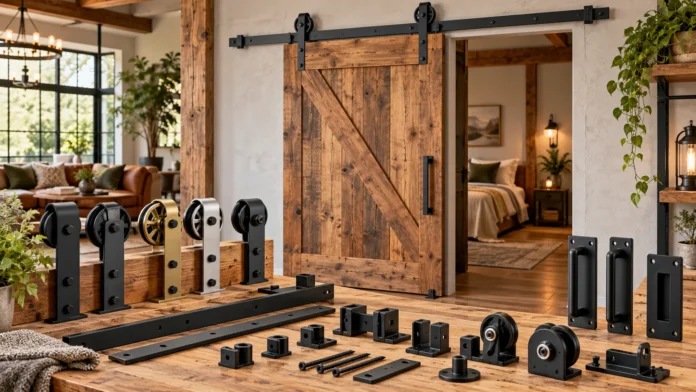
Barn door hardware is an essential component of any sliding barn door system, providing the support and movement needed for smooth operation. Whether you are upgrading your bedroom, renovating a farmhouse-style living room, or installing a sliding door in a modern home, choosing the right hardware is important. The proper combination of tracks, rollers, brackets, and handles can improve both functionality and appearance.
Modern barn door hardware is available in numerous styles, materials, and finishes to complement different interior design preferences. From traditional black steel tracks to sleek stainless steel systems, homeowners can find options suitable for rustic, industrial, and contemporary spaces. Understanding the differences between these components helps ensure that a sliding barn door operates reliably and matches the surrounding décor.
Buying barn door hardware requires more than selecting an attractive design. Door weight, track length, wall construction, mounting requirements, and hardware quality all influence the performance of the installation. This guide explores popular barn door hardware types, essential components, material options, and practical buying tips to help homeowners choose a suitable sliding door system.
What Is Barn Door Hardware?
Barn door hardware refers to the mechanical components that support and guide a sliding barn door along a horizontal track. Unlike traditional hinged doors, barn doors move sideways across a wall using specially designed rollers and mounting brackets. This arrangement creates a distinctive appearance while eliminating the floor clearance required by swinging doors.
A typical barn door hardware kit includes a metal track, roller hangers, mounting spacers, door stops, and a floor guide. Some systems also include handles, anti-jump components, or soft-close mechanisms. Each component plays a specific role in maintaining stable movement and preventing the door from shifting outside its intended operating path.
Barn door hardware is commonly used for bedrooms, bathrooms, closets, home offices, and decorative room dividers. Its popularity comes from its combination of visual appeal and practical space management. However, these systems require sufficient wall space beside the opening, making accurate measurements and proper installation planning essential.
Different Types of Barn Door Hardware Systems
Barn door hardware systems come in several configurations designed for different spaces and door arrangements. The most common option is a single-door system, which uses one sliding panel mounted to a horizontal track. This configuration works well for bedrooms, closets, and doorways with enough adjacent wall space for the panel to slide open.
Double barn door hardware supports two separate panels that typically move away from the center of a doorway. This arrangement is popular for wide entrances, dining rooms, and decorative interior openings. Some systems use independent tracks or specialized arrangements to accommodate particular architectural requirements and available wall clearance.
Bypass barn door hardware allows multiple door panels to move along overlapping paths, making it useful where wall space is limited. Other specialized systems include ceiling-mounted tracks and concealed hardware designs. Choosing between these configurations requires evaluating doorway dimensions, door thickness, wall support, and the desired appearance.
Single Barn Door Hardware Kits
Single barn door hardware kits are among the most popular choices for residential sliding door installations. They generally include one track and a pair of roller hangers designed to support a single door panel. Their straightforward arrangement makes them suitable for smaller openings where a traditional hinged door may interfere with furniture placement.
These kits are available in different track lengths, weight capacities, and decorative styles. Homeowners can select rustic exposed rollers, modern straight hangers, or more subtle designs that complement the surrounding interior. Many manufacturers also offer coordinated accessories, allowing handles and other visible components to match the main hardware finish.
Before purchasing a single-door kit, measure the opening and determine how far the door must travel to clear it. The wall must provide adequate space for the panel when fully open. A suitable mounting structure is equally important because the track and hangers must safely support the combined door and hardware loads.
Double and Bypass Barn Door Hardware
Double barn door hardware is designed for two door panels that slide along a shared opening. This configuration creates an attractive entrance for larger rooms and can serve as a decorative architectural feature. The symmetrical appearance is particularly appealing in farmhouse interiors, spacious living areas, and contemporary homes with wide passageways.
Bypass barn door hardware differs because the panels travel along separate, overlapping paths. This arrangement can reduce the amount of clear wall space required compared with traditional double doors. It is particularly useful for closets and storage spaces where installing two independently opening panels may not be practical.
Both configurations require careful attention to alignment, door overlap, and track capacity. Improper measurements can prevent the doors from opening correctly or cause panels to interfere with one another. Homeowners should confirm that the chosen hardware kit is specifically designed for their intended arrangement rather than assuming standard components are interchangeable.
Barn Door Tracks and Roller Systems
The track is one of the most important parts of barn door hardware because it supports and guides the moving door. Most residential systems use a horizontal metal rail mounted above the doorway. The track must be compatible with the door’s weight, roller design, and installation conditions to provide dependable operation.
Rollers travel along the track and allow the door panel to move horizontally. Depending on the system, rollers may be manufactured from steel, engineered polymers, or combinations of different materials. Their construction influences operating noise, durability, and smoothness, making roller quality an important consideration when comparing hardware kits.
Track systems also require appropriate mounting brackets, spacers, stops, and safety components. These accessories help maintain the correct distance from the wall and restrict movement beyond the intended travel area. Homeowners should select complete, compatible systems and follow manufacturer specifications rather than combining unrelated hardware components.
Barn Door Hardware Materials and Finishes
Steel is a common material for barn door hardware because it provides strength and supports a variety of decorative finishes. Powder-coated steel systems are frequently used in residential interiors, particularly where a matte black appearance is desired. The quality of the steel, coating, and manufacturing process affects long-term performance.
Stainless steel hardware offers another option, especially for homeowners who prefer a clean, modern appearance. Its corrosion resistance can be useful in suitable moisture-prone environments, although the specific steel grade and environmental conditions matter. Other finishes may include brushed nickel, bronze, brass-inspired coatings, and decorative metallic surfaces.
The best material depends on the door’s weight, installation location, maintenance expectations, and preferred interior style. Appearance should not be the only consideration because decorative finishes do not automatically indicate structural quality. Checking manufacturer specifications and hardware compatibility helps homeowners balance aesthetics with reliable performance.
Modern and Rustic Barn Door Hardware Styles
Rustic barn door hardware commonly features exposed black metal tracks, decorative straps, and traditional roller designs. These details complement reclaimed wood doors, farmhouse furniture, and interiors featuring natural materials. The combination of dark metal and visible wood grain creates a distinctive appearance associated with traditional agricultural architecture.
Modern barn door hardware typically uses streamlined hangers, simple track profiles, and minimal decorative detailing. Stainless steel, brushed metal, and understated black finishes are popular choices for contemporary interiors. These systems can complement smooth wooden panels, frosted glass doors, and minimalist room designs without making the hardware overly prominent.
Industrial-style hardware provides another option through heavier-looking metal components and exposed mechanical details. Homeowners can also select transitional designs that combine traditional materials with cleaner modern shapes. Coordinating the hardware with lighting fixtures, cabinet handles, and other architectural finishes helps create a balanced appearance throughout the room.
How to Choose the Right Barn Door Hardware Size
Choosing the correct hardware size begins with measuring the doorway and the proposed sliding door panel. The panel generally needs to overlap the opening enough to provide suitable coverage when closed. Track length must also accommodate the required door travel while accounting for rollers, stops, and surrounding wall conditions.
Many single barn door installations use a track approximately twice the width of the door panel, but this is only a general guideline. Actual requirements depend on the hardware design, opening dimensions, door position, and available clearance. Manufacturer sizing charts should always take priority over simplified measurement rules.
Homeowners should also measure the available space above and beside the doorway. Ceiling height, trim, light switches, electrical outlets, and nearby furniture can affect hardware placement or door movement. Accurate planning reduces the likelihood of purchasing an unsuitable track or discovering clearance problems after the hardware arrives.
Barn Door Hardware Weight Capacity and Safety
Weight capacity is one of the most important specifications when selecting barn door hardware. Different kits are designed to support different maximum loads, and exceeding the manufacturer’s rating can create serious safety risks. Solid wood, glass, and oversized doors may require more substantial hardware than lightweight engineered wood panels.
The published weight capacity should be checked against the actual door weight and any relevant manufacturer requirements. However, the hardware rating alone does not establish whether an installation is safe. Wall construction, mounting fasteners, attachment points, and structural support must also be capable of carrying the expected loads.
Properly installed anti-jump components, door stops, and floor guides help maintain controlled door movement. These features are especially important in busy households where doors are frequently operated. When mounting conditions are uncertain, a qualified installer can assess structural suitability and recommend appropriate hardware for the door.
Essential Accessories for Barn Door Hardware
Barn door hardware accessories contribute to both appearance and everyday functionality. Door handles and recessed pulls provide convenient gripping surfaces, while floor guides help control sideways movement. Selecting coordinated accessories can give the finished installation a more consistent appearance while supporting practical operation.
Soft-close mechanisms are another popular feature in modern sliding barn door systems. Compatible devices can slow the door near the end of its travel, helping reduce abrupt closing movements. Their performance depends on proper installation, door weight, and the specific hardware configuration, so compatibility should be confirmed before purchase.
Door stops and anti-jump devices are important safety components rather than optional decorative additions. They help restrict travel and reduce the risk of rollers leaving the track during normal operation. Homeowners should confirm that the kit includes all manufacturer-required accessories and avoid omitting safety components during installation.
Barn Door Hardware Buying Tips for Homeowners
Before purchasing barn door hardware, identify the intended room, door dimensions, installation surface, and preferred design. Consider whether a single, double, or bypass system best suits the opening. Evaluating these details early makes it easier to compare suitable products without focusing exclusively on color or decorative appearance.
Product quality should be assessed through material specifications, weight capacity, hardware completeness, and manufacturer support. Look for clear installation documentation and compatibility information rather than relying only on promotional photographs. Customer feedback may provide useful information about operating noise, finish durability, and missing components, although individual experiences can vary.
Price should be considered alongside long-term performance and installation requirements. A less expensive kit may not provide the same material quality, accessory selection, or warranty coverage as another option. Comparing complete specifications helps homeowners select hardware that meets their needs without paying unnecessarily for features they will not use.
Installation and Maintenance Considerations
Barn door hardware installation requires accurate alignment and secure mounting to suitable structural support. Incorrectly positioned tracks can affect door movement, while inadequate attachments can create serious hazards. Homeowners should follow the manufacturer’s installation requirements and use a qualified professional when structural conditions or hardware suitability are uncertain.
Routine maintenance generally involves keeping accessible track surfaces clean and observing the door during normal operation. Dust and debris can interfere with some roller systems, while worn hardware may produce unusual noises or uneven movement. Cleaning methods should match the manufacturer’s recommendations to avoid damaging protective coatings or moving components.
Periodic visual checks can also help identify loose-looking components, damaged stops, or changes in door alignment. Avoid adjusting load-bearing hardware while the door remains unsupported or attempting repairs beyond your experience. Professional attention is appropriate when a heavy door becomes unstable, difficult to control, or visibly damaged.
Common Mistakes to Avoid When Buying Barn Door Hardware
One common mistake is purchasing hardware before confirming the dimensions of the door and surrounding wall. An attractive track may be too short, incompatible with the panel, or unsuitable for available mounting space. Taking accurate measurements and checking the manufacturer’s requirements can prevent expensive purchasing errors.
Another mistake is overlooking door weight and structural support. Hardware designed for lightweight panels may not be suitable for heavy wooden or glass doors. Similarly, attaching a track to inadequate wall support can create dangerous conditions, even when the hardware itself has a suitable weight rating.
Homeowners may also overlook privacy, noise, and clearance requirements when choosing a barn door system. Because many sliding barn doors do not seal openings as tightly as traditional hinged doors, they may offer less sound isolation and privacy. Considering these limitations before purchase helps ensure the design meets the practical needs of the room.
Conclusion
Barn door hardware combines practical functionality with attractive interior design possibilities. From traditional single-door tracks to double and bypass systems, different configurations can accommodate a variety of residential spaces. Understanding the available materials, roller designs, finishes, and accessories helps homeowners choose components that complement their doors and surrounding décor.
The most important buying considerations include door weight, track length, mounting support, hardware compatibility, and overall construction quality. Proper measurements and manufacturer-approved safety components are essential for dependable operation. Selecting hardware based on performance as well as appearance can help prevent common installation problems and unnecessary maintenance expenses.
Whether you prefer rustic farmhouse details or a sleek contemporary finish, the right barn door hardware can enhance the appearance of your home. Careful planning, suitable installation, and occasional maintenance support long-term reliability. By comparing specifications and prioritizing safety, homeowners can create sliding door systems that are both functional and visually appealing.
Frequently Asked Questions (FAQs)
What Is Included in a Barn Door Hardware Kit?
Most barn door hardware kits include a track, roller hangers, mounting components, door stops, and a floor guide. Some also provide anti-jump devices, handles, or soft-close accessories, depending on the manufacturer.
What Type of Barn Door Hardware Is Best?
The best hardware depends on door weight, opening size, available wall space, and interior style. Quality steel or stainless steel systems with compatible rollers and properly rated mounting components are common choices.
How Long Should a Barn Door Track Be?
Many single barn door installations use a track approximately twice the door panel’s width. However, exact sizing depends on the hardware system, doorway dimensions, roller spacing, and required travel clearance.
Can Barn Door Hardware Support Heavy Wooden Doors?
Yes, properly rated barn door hardware can support heavy wooden doors when installed on suitable structural supports. Always verify the manufacturer’s load capacity and mounting requirements before selecting hardware for oversized panels.
Does Barn Door Hardware Require Regular Maintenance?
Barn door hardware benefits from occasional cleaning and visual inspection. Keeping tracks free from debris and addressing unusual movement or damaged components can help maintain smooth operation and reliable performance.