
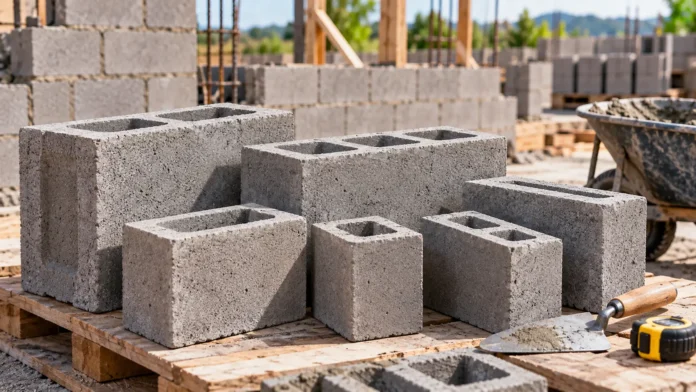
Cinder blocks are among the most commonly used building materials in residential, commercial, and landscaping projects. They are popular because of their durability, versatility, and practical construction benefits. However, choosing the correct block size is essential for accurate measurements and material planning. Understanding cinder block dimensions helps homeowners, builders, and contractors select suitable blocks for different construction applications.
The standard cinder block size in the United States is 8 inches high, 8 inches wide, and 16 inches long. However, these are nominal dimensions, meaning the measurements include space for mortar joints. The actual dimensions are slightly smaller. Cinder blocks also come in several thicknesses and special shapes to accommodate different building requirements.
Whether you are planning a garden wall, garage, foundation, or decorative structure, knowing standard concrete block sizes can prevent costly mistakes. This guide explains common cinder block dimensions, actual versus nominal measurements, available block types, and important sizing considerations. It also explores how block dimensions affect material estimates, wall thickness, and overall construction planning.
What Are Standard Cinder Block Dimensions?
The most common standard cinder block dimensions are 8 × 8 × 16 inches, representing width, height, and length. These measurements describe the nominal size of a standard concrete masonry unit, commonly called a CMU. The actual block measures approximately 7⅝ × 7⅝ × 15⅝ inches. The difference provides space for mortar joints between adjoining blocks during construction.
Standard concrete blocks are available in several widths while maintaining similar heights and lengths. Common nominal thicknesses include 4, 6, 8, 10, and 12 inches. Different thicknesses serve different construction purposes, including partitions, exterior walls, and structural masonry. Choosing the appropriate size depends on the intended application, building requirements, and engineering specifications.
Block dimensions are usually provided in inches throughout the United States, although metric measurements are common internationally. Understanding both systems can help when reviewing construction plans or comparing products from different manufacturers. It is important to verify the order of measurements because some suppliers list dimensions differently. Accurate specifications support better planning and material selection.
Standard Cinder Block Sizes and Dimensions Chart
Cinder blocks are manufactured in several standard sizes to accommodate different wall thicknesses and construction requirements. Most conventional full-length blocks have a nominal height of 8 inches and length of 16 inches. Their width varies depending on the intended application. Understanding these measurements makes comparing concrete masonry units easier before purchasing materials.
The following chart shows common nominal sizes and corresponding actual dimensions used for standard modular concrete blocks. These measurements assume a typical ⅜-inch mortar joint allowance. Dimensions are presented in width × height × length order. Specialty blocks and individual manufacturers may offer different sizes, so product specifications should always be checked before ordering.
| Nominal Block Size | Actual Block Dimensions |
|---|---|
| 4 × 8 × 16 inches | 3⅝ × 7⅝ × 15⅝ inches |
| 6 × 8 × 16 inches | 5⅝ × 7⅝ × 15⅝ inches |
| 8 × 8 × 16 inches | 7⅝ × 7⅝ × 15⅝ inches |
| 10 × 8 × 16 inches | 9⅝ × 7⅝ × 15⅝ inches |
| 12 × 8 × 16 inches | 11⅝ × 7⅝ × 15⅝ inches |
Although the chart covers commonly available sizes, not every supplier stocks every variation. Regional construction practices and project requirements can influence product availability. Some manufacturers also provide half-height, half-length, or architectural blocks with different measurements. Confirming dimensions before construction helps avoid ordering mistakes and ensures compatibility with the planned masonry layout.
Understanding Nominal vs. Actual Cinder Block Dimensions
Nominal dimensions describe the intended modular size of a concrete block after accounting for mortar joints. Actual dimensions represent the physical measurements of the block itself. For example, a nominal 8 × 8 × 16-inch block typically measures 7⅝ × 7⅝ × 15⅝ inches. This distinction is important because masonry walls are usually planned using nominal measurements.
The difference between nominal and actual dimensions accommodates approximately ⅜-inch mortar joints. These joints connect adjoining blocks and help create consistent spacing throughout masonry construction. Without this allowance, standard blocks would not fit typical modular wall layouts as intended. Understanding mortar joint thickness is therefore essential when interpreting block measurements and estimating materials.
Builders generally use nominal dimensions when calculating wall coverage and arranging masonry courses. Actual dimensions become important when checking physical clearance, product fit, or individual block measurements. Confusing these two systems can lead to inaccurate estimates and unexpected construction adjustments. Learning the difference makes it easier to read specifications and communicate with building material suppliers.
Common Types of Cinder Blocks and Their Sizes
Concrete masonry units come in several shapes designed for different construction purposes. Standard hollow blocks are among the most recognizable options and usually feature internal openings that reduce material usage and accommodate reinforcement. Solid blocks contain more concrete material and are commonly used for specific masonry applications. Both types are available in different sizes and configurations.
Half blocks are shorter than conventional full-length units and help accommodate particular wall layouts. Corner blocks, bond beam blocks, and lintel units serve specialized purposes within masonry construction. Some feature modified shapes or channels to accommodate reinforcement and structural components. Their dimensions may resemble standard blocks, although internal configurations can vary considerably.
Architectural concrete blocks offer additional options for decorative walls and exterior finishes. Split-face blocks create textured surfaces, while smooth-face units provide a more uniform appearance. Certain specialty products are designed for retaining walls, landscaping, or ventilation features. Selecting the correct block type involves considering both its physical dimensions and intended use.
Dimensions of 4-Inch Cinder Blocks
A 4-inch cinder block typically has nominal dimensions of 4 × 8 × 16 inches. Its actual dimensions are approximately 3⅝ inches wide, 7⅝ inches high, and 15⅝ inches long. This relatively narrow block is commonly associated with partition walls and other applications requiring limited thickness. Its compact profile makes it useful where conserving space is important.
Four-inch concrete blocks are often found in non-load-bearing partitions and selected decorative masonry projects. Their narrower profile requires less space than thicker masonry units. However, reduced thickness can limit their suitability for applications involving significant loads or lateral pressure. Structural requirements should always be evaluated before choosing this type of block.
These blocks may also be considered for certain landscaping features or small masonry enclosures. Their dimensions make them convenient for projects where wall thickness and available space are important considerations. However, different manufacturers may offer variations in density, internal design, and strength. Always confirm the product’s specifications and intended application before making a final selection.
Dimensions of 6-Inch Cinder Blocks
A standard 6-inch cinder block has nominal dimensions of 6 × 8 × 16 inches. The actual measurements are generally 5⅝ inches wide, 7⅝ inches high, and 15⅝ inches long. This size provides additional wall thickness compared with a 4-inch concrete block. It is commonly available for masonry projects requiring a moderately thick wall.
Six-inch concrete masonry units may be used for selected partition walls, exterior enclosures, and other masonry applications. Their suitability depends on structural loading, reinforcement, wall height, and local building requirements. The additional thickness can influence stability and construction characteristics compared with narrower blocks. However, thickness alone does not determine whether a masonry wall is structurally adequate.
When comparing 6-inch blocks with other options, consider available space and the proposed wall design. Different block configurations may also affect weight, handling, and material requirements. Contractors should review the appropriate product information rather than relying only on nominal dimensions. Selecting the correct unit helps ensure that the finished masonry system matches the project specifications.
Dimensions of 8-Inch Cinder Blocks
Eight-inch cinder blocks are among the most widely recognized concrete masonry units in the United States. Their nominal dimensions are 8 × 8 × 16 inches, while actual dimensions are approximately 7⅝ × 7⅝ × 15⅝ inches. This block size is commonly used in residential and commercial masonry construction. Its familiar dimensions make it a frequent reference point for material estimates.
The 8-inch concrete block may be specified for foundations, exterior walls, and other structural masonry applications. Its suitability depends on the complete wall design, including reinforcement, grout, support conditions, and applied loads. Different versions are available with hollow cores and specialized configurations. Builders must select products that satisfy the relevant engineering and construction requirements.
Because this size is widely used, many construction guides and masonry calculations refer to it as the standard block. Its nominal face measures 8 inches high and 16 inches long. This consistent modular size simplifies estimating wall coverage and comparing different block thicknesses. Nevertheless, manufacturer specifications should be confirmed before purchasing materials for a particular project.
Dimensions of 10-Inch and 12-Inch Cinder Blocks
Ten-inch cinder blocks typically measure 10 × 8 × 16 inches nominally. Their actual dimensions are approximately 9⅝ × 7⅝ × 15⅝ inches. Twelve-inch blocks have nominal dimensions of 12 × 8 × 16 inches and actual measurements of about 11⅝ × 7⅝ × 15⅝ inches. Both sizes provide greater wall thickness than conventional 8-inch units.
Thicker concrete masonry units may be specified for projects involving substantial structural loads or specialized building requirements. They can appear in commercial construction, foundation systems, and engineered masonry walls. However, larger dimensions do not automatically guarantee adequate strength or stability. The complete structural design must account for materials, reinforcement, connections, and environmental conditions.
These larger blocks generally require more handling consideration because their weight and material volume can be greater. Transportation, storage, and installation planning may also differ from smaller masonry units. Availability varies among suppliers and regions, particularly for specialty configurations. Confirming exact dimensions and product specifications helps prevent unnecessary project delays and ordering problems.
What Are the Dimensions of Half Cinder Blocks?
Half cinder blocks are shorter masonry units designed to complement standard full-length blocks. A common nominal half-length unit measures approximately 8 × 8 × 8 inches, although actual dimensions vary by product design. These units help accommodate wall layouts requiring shorter sections. Their shape may differ from a simple half of a standard block.
Half-height units are another variation, often measuring 8 × 4 × 16 inches nominally. They provide a shorter course height while maintaining the approximate length of a full block. Such products can be useful when masonry designs require different vertical dimensions. Specialty units may also be manufactured for architectural finishes or specific building applications.
Understanding the distinction between half-length and half-height blocks is important when reviewing product catalogs. The term half block does not always identify which dimension has been reduced. Manufacturers may also offer alternative shapes and measurements. Checking the complete width, height, and length specifications helps ensure that the chosen unit matches the intended construction layout.
How Much Does a Standard Cinder Block Weigh?
The weight of a cinder block depends on its dimensions, concrete density, and internal configuration. Standard hollow concrete blocks generally weigh less than comparable solid units because they contain less material. Lightweight concrete blocks may also differ considerably from normal-weight masonry products. Therefore, block dimensions alone cannot provide an exact weight.
An ordinary 8 × 8 × 16-inch hollow concrete masonry unit may weigh roughly 30 to 40 pounds, although some products fall outside this range. Solid units and specialty blocks can be considerably heavier. Wider blocks may also contain more material and have greater overall mass. Product weight should be confirmed using manufacturer specifications rather than general estimates.
Block weight matters when planning transportation, delivery, storage, and construction logistics. Heavy masonry units can require specialized handling arrangements depending on project size and workplace requirements. Weight also influences calculations involving structural dead loads. Contractors and project planners should account for the specific products being used instead of assuming every block weighs the same.
How Many Cinder Blocks Are Needed Per Square Foot?
Estimating block quantities requires understanding the face dimensions of the masonry units being used. A standard full-size block has a nominal face measuring 8 inches high and 16 inches long. This creates a modular face area of approximately 0.889 square feet. Therefore, about 1.125 standard blocks are needed for each square foot of wall area.
For example, a wall measuring 10 feet long and 6 feet high has an area of 60 square feet. Multiplying this area by 1.125 gives an estimate of 67.5 standard blocks before adjustments. This calculation assumes conventional modular units and standard mortar spacing. Actual material requirements depend on the wall layout and project details.
Doors, windows, corners, openings, and specialty masonry units can affect the final block count. Additional material may also be needed for cuts, damaged units, and construction waste. A reasonable allowance depends on the complexity of the project. Using accurate wall measurements and confirming block dimensions can improve material estimates and reduce unnecessary purchases.
How Mortar Joints Affect Cinder Block Measurements
Mortar joints are an essential part of conventional masonry construction because they connect adjoining units and help form consistent wall courses. A commonly used nominal mortar joint thickness is approximately ⅜ inch. This allowance explains why standard cinder blocks are manufactured slightly smaller than their nominal dimensions. The combined block-and-joint module supports accurate construction layouts.
Horizontal mortar joints separate successive block courses, while vertical joints connect neighboring masonry units. Their dimensions affect the overall appearance and modular measurements of a completed wall. Consistent joint spacing is important for construction quality and alignment. However, actual joint requirements may vary depending on project specifications and masonry construction practices.
When estimating materials, nominal dimensions already account for typical mortar joint spacing. Adding another full mortar allowance to those dimensions can produce inaccurate calculations. Similarly, using only physical block measurements may underestimate the intended wall coverage. Understanding this relationship helps homeowners and contractors interpret construction plans more accurately and avoid measurement confusion.
Cinder Block Dimensions in Inches vs. Millimeters
Cinder block measurements are commonly expressed in inches in the United States, while many international construction markets use millimeters. Understanding metric equivalents can help when comparing technical information or working with imported materials. A nominal 8 × 8 × 16-inch block corresponds approximately to 203 × 203 × 406 millimeters. These figures represent converted nominal dimensions.
The actual measurements of a typical American standard block are approximately 194 × 194 × 397 millimeters. These values correspond to the familiar 7⅝ × 7⅝ × 15⅝-inch measurements. However, metric block systems used in other countries may follow different manufacturing standards. Similar-looking products are not necessarily interchangeable simply because their measurements appear close.
When comparing international products, always examine the manufacturer’s stated dimensions rather than relying entirely on unit conversions. Local masonry practices may also involve different mortar joints and modular coordination systems. Construction plans should follow the standards applicable to the project location. Accurate conversions are helpful, but product compatibility requires more than matching numerical measurements.
How to Choose the Right Cinder Block Size
Choosing the correct cinder block size begins with understanding the intended purpose of the wall or structure. Decorative garden features, interior partitions, foundations, and retaining walls can have very different requirements. A block suitable for one application may not be appropriate for another. Wall height, loading conditions, environmental exposure, and applicable building regulations should influence the selection.
Consider the available construction space and the required finished wall thickness. Narrower blocks may be appropriate for certain partitions, while thicker units may be specified for engineered masonry systems. However, structural performance depends on more than block width. Reinforcement, grout, foundations, drainage, and other design elements can all affect suitability.
It is also important to compare product availability, transportation requirements, and overall material costs. Specialty blocks may offer useful design features but may not be stocked by every supplier. Reviewing manufacturer specifications helps confirm dimensions, density, and intended applications. For load-bearing or retaining structures, a qualified professional should determine the appropriate masonry design.
Common Mistakes When Measuring Cinder Blocks
One common measurement mistake is confusing nominal dimensions with actual block measurements. A product labeled 8 × 8 × 16 inches is generally smaller when measured physically. Ignoring this difference can lead to incorrect assumptions about fit and wall dimensions. Understanding the role of mortar joints helps prevent this problem during construction planning.
Another mistake involves assuming every concrete block follows identical specifications. Different manufacturers may produce specialty units with unique dimensions, shapes, and internal configurations. Architectural blocks and landscaping products may not match standard masonry measurements. Checking the exact product description before ordering is essential for avoiding compatibility issues.
Some people also estimate block quantities without accounting for openings, corners, or material waste. Others overlook changes in dimensions between metric and imperial products. These errors can create unnecessary expenses and construction delays. Accurate measurements, clear product specifications, and careful planning help make masonry projects more predictable and efficient.
Conclusion
Understanding cinder block dimensions is essential for selecting suitable materials and planning construction projects accurately. The standard concrete masonry unit has nominal dimensions of 8 × 8 × 16 inches, with slightly smaller actual measurements. Other common widths include 4, 6, 10, and 12 inches. Recognizing these variations makes it easier to compare products and understand their intended applications.
The difference between nominal and actual dimensions is particularly important because standard masonry layouts account for mortar joints. Block thickness, weight, shape, and internal configuration also influence product selection. Accurate measurements help improve material estimates and reduce unnecessary purchasing mistakes. However, dimensions alone do not determine whether a particular block is suitable for structural construction.
Whether you are planning a decorative wall, foundation, or another masonry project, choosing the appropriate block requires careful consideration. Review manufacturer specifications, understand the relevant measurement system, and follow applicable building requirements. For structural applications, professional design guidance is important. With accurate information and thoughtful planning, selecting the right concrete masonry units becomes much easier.
Frequently Asked Questions
What is the standard size of a cinder block?
The standard cinder block size is 8 × 8 × 16 inches nominally. Its actual dimensions are approximately 7⅝ × 7⅝ × 15⅝ inches, allowing room for typical mortar joints.
What is the difference between nominal and actual cinder block dimensions?
Nominal dimensions describe the modular size, including an allowance for mortar joints. Actual dimensions describe the physical block itself, which is typically ⅜ inch smaller in each dimension.
What sizes do cinder blocks come in?
Common nominal cinder block sizes include 4 × 8 × 16, 6 × 8 × 16, 8 × 8 × 16, 10 × 8 × 16, and 12 × 8 × 16 inches.
How many standard cinder blocks are needed per square foot?
A standard 8 × 8 × 16-inch block covers approximately 0.889 square feet using nominal face dimensions. About 1.125 blocks are needed per square foot before accounting for openings or waste.
Are cinder blocks and concrete blocks the same size?
Modern products commonly called cinder blocks are usually concrete masonry units with standard modular dimensions. However, specialty products can have different sizes, so checking manufacturer specifications is recommended.