
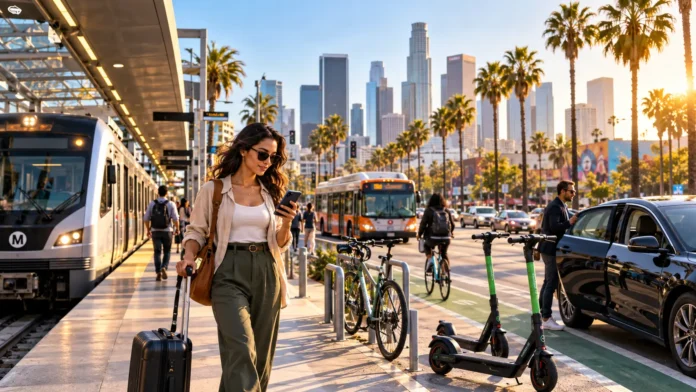
Los Angeles is one of the most exciting cities in the United States, famous for its beautiful beaches, Hollywood attractions, diverse neighborhoods, and vibrant entertainment culture. However, exploring this enormous city can feel challenging, especially for first-time visitors unfamiliar with its transportation network. Understanding how to get around Los Angeles helps travelers save time, manage transportation expenses, and enjoy popular attractions without unnecessary confusion.
Unlike many major cities with compact tourist centers, Los Angeles stretches across a large metropolitan area where famous destinations can be far apart. Visitors can travel using Metro trains, public buses, rental cars, rideshare services, bicycles, and walking routes. Choosing the right transportation option depends on your itinerary, available budget, accommodation location, and personal travel preferences.
This comprehensive Los Angeles transportation guide explains the best ways to explore the city, including public transit, airport transfers, driving tips, and budget-friendly travel strategies. You will also discover practical advice for visiting Hollywood, Santa Monica, Downtown Los Angeles, and other popular neighborhoods. With thoughtful planning, getting around LA can become a manageable and enjoyable part of your California adventure.
1. Understanding Transportation in Los Angeles
Los Angeles is widely known for its car-oriented transportation network, but visitors have several alternatives to driving. The city and surrounding region feature extensive roads, public transit services, pedestrian-friendly neighborhoods, and dedicated cycling routes. Understanding how these transportation options connect makes planning daily sightseeing routes considerably easier for travelers unfamiliar with Southern California.
One important consideration is the distance between major attractions, which can be greater than expected. Hollywood, Santa Monica, Beverly Hills, and Downtown Los Angeles are located in different parts of the metropolitan area. Traveling between these destinations may involve significant time, particularly during busy commuting periods when road congestion affects buses, taxis, and private vehicles.
Before starting your trip, organize attractions into geographic groups and identify suitable transportation connections. Visiting nearby destinations on the same day reduces unnecessary travel and allows more time for sightseeing. A combination of public transportation, occasional rideshare journeys, and walking often provides a practical alternative to renting a car for every activity.
2. Getting Around Los Angeles Using Metro Rail
The Los Angeles Metro Rail system is one of the most useful transportation options for visitors who want to avoid driving through heavy traffic. Its subway and light rail services connect several important neighborhoods, transportation hubs, and popular attractions. Travelers can use the network to reach destinations such as Downtown Los Angeles, Hollywood, Santa Monica, and Universal City.
The B Line connects Downtown Los Angeles with Hollywood and North Hollywood, while the E Line provides a convenient connection between Downtown and Santa Monica. The A Line serves additional communities, including Pasadena and Long Beach. The D Line also serves important destinations along Wilshire Boulevard, including newer stations in the Mid-Wilshire area.
Metro Rail can be particularly convenient when your accommodation is near a station and your planned attractions are accessible through the network. However, not every popular destination has a nearby rail stop, so some journeys require connecting buses or walking. Checking current routes and service updates before leaving helps prevent unnecessary delays.
3. How to Use Public Buses in Los Angeles
Public buses provide extensive transportation coverage throughout Los Angeles, reaching many neighborhoods that are not directly connected by rail. Metro operates a large bus network, while several cities maintain additional local transportation services. This combination allows travelers to explore shopping districts, residential areas, beaches, and cultural attractions without depending entirely on private vehicles.
Metro Local buses serve numerous streets and neighborhoods, while selected services provide faster connections along major corridors. Other operators, including Santa Monica’s Big Blue Bus and Culver CityBus, cover additional areas. Understanding which agency operates your route is useful because payment arrangements, service schedules, and transfer rules may differ between transportation providers.
Travelers can use digital maps and transit planning applications to identify suitable bus stops and estimate journey times. Because buses share roads with other vehicles, travel duration may increase during traffic congestion. Planning additional time for connections and checking the direction of your route can make bus travel more comfortable and predictable.
4. Understanding Metro Fares and Payment Options
Los Angeles Metro offers a relatively straightforward fare system for regular bus and rail journeys. As of October 2026, the standard base fare is $1.75, with a daily fare cap of $5 and a seven-day cap of $18 for eligible regular Metro travel. These caps help frequent riders control transportation expenses.
Passengers can pay using a TAP card or accepted contactless payment methods on supported Metro services. Eligible transfers between Metro services are generally included within a two-hour period, excluding round trips. Using the same eligible payment method consistently is important for receiving applicable fare-capping benefits throughout your daily journeys.
Before traveling, check current fare information and any discounts that may apply to your circumstances. Other transit agencies may operate under different ticketing arrangements, so not every journey follows identical rules. Understanding payment requirements in advance makes boarding easier and reduces confusion when switching between transportation services across the metropolitan area.
5. How to Get From LAX Airport to Los Angeles
Los Angeles International Airport, commonly known as LAX, is the main arrival point for many international and domestic visitors. The airport is located southwest of central Los Angeles, and transportation choices include airport buses, Metro connections, taxis, and rideshare services. Selecting the right option depends on your final destination, luggage, and arrival schedule.
The LAX FlyAway service provides convenient airport bus connections, including routes serving Union Station and Van Nuys. Travelers can also connect to Metro Rail through the LAX/Metro Transit Center, which serves the C and K Lines. Airport connector arrangements can evolve, so check the current terminal transfer instructions before your arrival.
Taxis and rideshare services are convenient alternatives for visitors carrying substantial luggage or traveling to destinations with complicated public transit connections. However, fares may vary considerably according to traffic, distance, and demand. Comparing available services before departure can help you choose an airport transfer that balances convenience, cost, and journey time.
6. Renting a Car and Driving in Los Angeles
Renting a car can provide valuable flexibility when exploring Los Angeles, particularly if your itinerary includes destinations outside major public transportation corridors. A vehicle may be useful for visiting several distant neighborhoods or traveling beyond the city. However, driving also involves traffic congestion, parking expenses, and navigation through unfamiliar road networks.
Los Angeles contains extensive freeways and major roads connecting different parts of the metropolitan region. Routes can become crowded during morning and evening commuting periods, increasing travel times significantly. Visitors should use reliable navigation tools, understand local traffic rules, and avoid creating overly ambitious itineraries involving numerous distant attractions.
Before renting a vehicle, compare rental conditions, insurance arrangements, fuel expenses, and parking fees. Some hotels charge separately for overnight parking, which can increase the overall cost of your stay. Renting a car only for selected excursion days may provide better value than keeping one throughout a trip focused primarily on central attractions.
7. Using Uber, Lyft, and Taxi Services in LA
Rideshare services such as Uber and Lyft are widely used transportation options in Los Angeles, offering convenient journeys between neighborhoods and attractions. They can be particularly useful when public transportation requires multiple transfers or when your destination is far from a rail station. Fares vary according to distance, traffic conditions, and demand.
Traditional taxis are another option, especially around airports, hotels, and major transportation centers. Visitors should use authorized services and confirm pickup arrangements before beginning their journey. Rideshare availability and account eligibility depend on provider rules, so travelers should review applicable requirements and safety information before arranging transportation.
For short journeys or occasional transfers, rideshare services can complement public transit effectively. However, relying on private rides for every destination may become expensive because Los Angeles covers a large geographic area. Comparing journey costs and planning nearby activities together helps reduce unnecessary transportation spending during your vacation.
8. Exploring Los Angeles by Walking and Bicycle
Although Los Angeles is often associated with driving, several neighborhoods offer enjoyable walking experiences. Areas such as Downtown Santa Monica, parts of Hollywood, and selected Downtown Los Angeles districts contain attractions within manageable distances. Walking allows visitors to discover interesting architecture, local cafés, shopping streets, and smaller attractions between major landmarks.
Cycling provides another option in suitable areas, particularly along designated coastal bicycle paths and selected urban routes. The beachfront path around Santa Monica and Venice is popular for recreational riding. Visitors should use appropriate safety equipment, follow local cycling rules, and choose routes suitable for their experience and comfort levels.
Walking and cycling conditions vary considerably between neighborhoods because some roads have heavy traffic or limited pedestrian infrastructure. Check routes before departure and avoid assuming that nearby places on a map are always easily accessible on foot. Combining short walks with public transportation creates a practical approach to exploring pedestrian-friendly areas.
9. Getting Around Hollywood and Universal Studios
Hollywood is one of the most recognizable areas of Los Angeles, attracting visitors interested in entertainment history, famous landmarks, and sightseeing experiences. Many attractions around Hollywood Boulevard can be explored on foot, including the Hollywood Walk of Fame and TCL Chinese Theatre. Metro Rail provides useful connections to this busy district.
The B Line serves Hollywood through stations including Hollywood/Highland and Hollywood/Vine, making it convenient to reach major tourist attractions from Downtown Los Angeles. The same line also connects to Universal City/Studio City Station. From there, visitors can use available connections to reach Universal Studios Hollywood and nearby entertainment destinations.
Hollywood’s streets can become crowded during busy travel periods, so allowing extra time is helpful. Visitors should also distinguish between Hollywood, West Hollywood, and other nearby communities because they are separate areas with different transportation connections. Planning your route before departure helps prevent unnecessary walking or complicated transfers.
10. Traveling to Santa Monica, Venice Beach, and Beverly Hills
Santa Monica is among the most popular coastal destinations in Los Angeles County, known for its beautiful beach, famous pier, and lively shopping areas. The Metro E Line connects Downtown Los Angeles with Downtown Santa Monica, providing a convenient alternative to driving. Visitors can explore the waterfront and nearby pedestrian-friendly districts after arriving.
Venice Beach is located farther south along the coastline and offers a distinctive atmosphere with recreational areas, shops, and public art. Travelers can reach Venice using appropriate bus connections, cycling routes, or suitable local transportation services. Walking between parts of Santa Monica and Venice can also be enjoyable when weather and distance are comfortable.
Beverly Hills is another popular sightseeing destination, recognized for its elegant streets, shopping areas, and famous Rodeo Drive. Metro’s D Line reaches Wilshire/La Cienega, but many Beverly Hills attractions still require additional travel. Checking the exact destination rather than relying only on neighborhood names helps you select the most convenient route.
11. How to Avoid Los Angeles Traffic and Save Time
Traffic congestion is one of the most important factors to consider when planning transportation in Los Angeles. Major freeways and busy streets can experience significant delays during commuting periods and major events. Understanding these patterns helps visitors create realistic travel schedules rather than assuming that short distances always mean quick journeys.
Morning and late-afternoon commuting periods are commonly busy, although congestion can occur throughout the day. When possible, use Metro Rail for journeys served by suitable stations because trains avoid ordinary road traffic. Visiting attractions within the same neighborhood also reduces unnecessary driving and the possibility of spending large portions of your vacation in transit.
Digital navigation tools can provide estimated journey times, alternative routes, and information about service disruptions. However, these estimates may change unexpectedly due to accidents, construction, or weather conditions. Leave additional time when traveling to airports, scheduled tours, and ticketed attractions so occasional delays do not disrupt important plans.
12. Essential Los Angeles Transportation Tips for First-Time Visitors
Choosing accommodation in a convenient location is one of the most effective ways to simplify transportation in Los Angeles. Staying near a Metro station or within walking distance of several planned attractions can reduce daily travel expenses. Consider your overall itinerary before selecting a hotel rather than choosing accommodation based entirely on the lowest advertised price.
Use transportation planning applications to compare train, bus, walking, and driving options before leaving your accommodation. Check operating hours, especially when returning from evening activities or attending events that finish late. Keeping your phone charged and having access to essential route information can make navigating unfamiliar neighborhoods considerably easier.
Finally, maintain flexibility when exploring Los Angeles because travel times and transportation conditions can change throughout the day. Follow ordinary personal safety precautions, use designated crossings, and remain aware of your surroundings at stations and busy stops. Thoughtful planning and realistic expectations help make transportation a convenient part of your travel experience.
Conclusion
Getting around Los Angeles becomes much easier when you understand the city’s transportation options and plan your routes carefully. Metro trains, public buses, rental cars, rideshare services, and walking routes each offer advantages depending on your destination. Choosing the right combination allows you to explore popular attractions without relying on one transportation method for every journey.
The most practical Los Angeles transportation strategy involves organizing sightseeing by neighborhood and considering traffic conditions before planning longer journeys. Public transportation can be an affordable choice for destinations near rail and bus connections, while rental cars provide flexibility for selected excursions. Understanding airport transfers and payment options also helps prevent unexpected expenses and unnecessary travel difficulties.
Whether you are visiting Hollywood, relaxing at Santa Monica Beach, exploring Downtown Los Angeles, or discovering other Southern California attractions, thoughtful transportation planning can improve your vacation. Choose accommodation that matches your itinerary, check current service information, and allow reasonable time between activities. With these practical travel tips, navigating Los Angeles can become a manageable and enjoyable experience.
Frequently Asked Questions (FAQs)
What is the best way to get around Los Angeles without a car?
Metro trains and buses are practical options for many popular destinations. Combining public transportation with walking and occasional rideshare journeys can help visitors explore Los Angeles without renting a vehicle.
Is public transportation in Los Angeles affordable?
Yes, LA Metro offers relatively affordable transportation, with a regular base fare of $1.75 and daily and weekly fare caps. Other transportation providers may have different pricing arrangements.
Do tourists need to rent a car in Los Angeles?
Not necessarily. Visitors staying near Metro stations can reach several major attractions without driving. A rental car may be useful for distant destinations or excursions outside convenient transit corridors.
How do you get from LAX Airport to Downtown Los Angeles?
The LAX FlyAway bus to Union Station is one convenient option. Travelers can also use airport connections to Metro services or choose authorized taxis and rideshare transportation.
Is Los Angeles easy to explore using Metro?
Metro makes many destinations accessible, including Hollywood, Santa Monica, and Downtown Los Angeles. However, some attractions require additional bus connections, walking, or other transportation because the metropolitan area is extensive.