
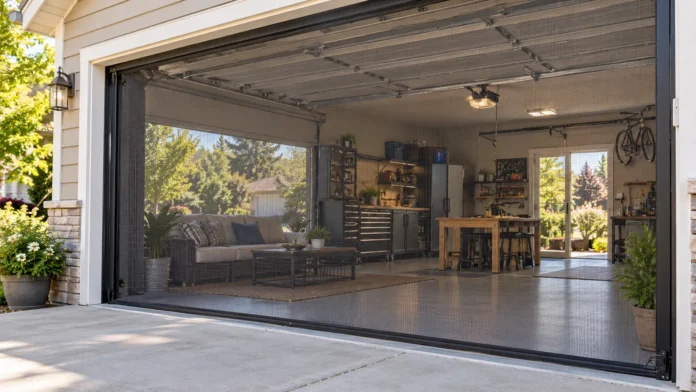
What Is a Garage Door Screen?
A garage door screen is a specially designed barrier that allows fresh air and natural light into a garage while helping keep insects, leaves, and outdoor debris away. It typically covers the garage door opening and can be opened or removed when vehicle access is needed. This practical addition makes garages more comfortable for various household activities.
Many homeowners install garage door screens to turn underused garage spaces into functional areas for hobbies, exercise, recreation, or everyday relaxation. Unlike a traditional garage door, a mesh screen promotes airflow while maintaining a degree of separation from the outdoors. Different designs offer varying levels of convenience, durability, visibility, and protection from insects.
Garage door screens are available in several styles, including retractable, magnetic, sliding, roll-up, and fixed systems. Some products are designed for simple seasonal use, while others provide a more permanent installation. Understanding the different types, benefits, sizes, and costs can help homeowners choose a garage screen that suits their needs and budget.
Benefits of Installing a Garage Door Screen
One of the biggest advantages of a garage door screen is improved ventilation during comfortable weather. When the garage door is open, a mesh barrier allows outdoor air to circulate while helping reduce the number of insects entering the space. This makes garages more suitable for activities that benefit from natural airflow.
Garage screens can also make existing garage spaces more versatile without requiring a complete renovation. Homeowners may use screened garages for casual seating, exercise, crafts, or hobbies that do not involve hazardous fumes. The screen provides a connection to outdoor surroundings while creating a more comfortable environment for everyday activities.
Another benefit is that garage door screens can provide an additional barrier against flying debris, leaves, and some airborne particles. However, they do not replace security doors, weatherproof walls, or properly designed ventilation systems. Understanding these limitations helps homeowners use their garage screens safely and choose products that meet their expectations.
Retractable Garage Door Screens
Retractable garage door screens are designed to open and close when needed, making them a convenient option for multipurpose garages. Many systems roll into a housing mounted above the opening or operate along dedicated tracks. When retracted, the screen leaves the garage entrance accessible for parking vehicles or moving larger objects.
These screens are popular because they provide a relatively clean appearance when not in use. Some retractable systems feature manual operation, while more advanced versions offer motorized controls for added convenience. Quality products may also include reinforced mesh, durable frames, and tensioning systems that help the material remain properly positioned.
Retractable garage screens generally require more precise installation than basic temporary mesh curtains. Homeowners should consider opening dimensions, mounting space, and compatibility with the existing garage door. Checking the manufacturer’s specifications is especially important because the screen must operate independently without interfering with the garage door’s tracks, springs, or safety features.
Magnetic Garage Door Screens
Magnetic garage door screens are among the most accessible options for homeowners seeking an affordable and removable solution. These screens commonly feature two mesh panels with magnetic closures running along the center opening. The panels separate when someone walks through and reconnect afterward, helping keep flying insects outside.
Magnetic screens are useful for households that want occasional ventilation without investing in a permanent installation. Many products attach using hook-and-loop fasteners or other manufacturer-approved mounting methods. Their lightweight construction makes them convenient for seasonal use, although durability can vary considerably depending on the quality of the mesh and closures.
When choosing a magnetic garage screen, look for reinforced edges, appropriate dimensions, and a reliable center closure. Strong winds and frequent use may cause lightweight products to shift or separate unexpectedly. Magnetic screens should also be positioned where they cannot become caught in the garage door mechanism or create an obstruction.
Roll-Up Garage Door Screens
Roll-up garage door screens provide another practical way to control ventilation and access. They generally consist of mesh material that rolls upward into a compact position when the garage opening needs to remain clear. Depending on the product, the system may use straps, tracks, a spring-assisted mechanism, or another method to support operation.
Manual roll-up screens are often simpler than sophisticated retractable systems and may be suitable for seasonal garage conversions. Some designs allow homeowners to secure the screen at different positions, while others are intended to remain fully raised or lowered. Product construction determines how effectively the screen resists wind and maintains its shape.
Before selecting a roll-up garage screen, consider how frequently the entrance will be used for vehicle access. Screens that require manual fastening may be less convenient in garages where vehicles regularly enter and exit. A product with straightforward operation and compatible mounting hardware can make everyday use considerably easier.
Sliding Garage Door Screens
Sliding garage door screens operate along tracks, allowing one or more screened panels to move horizontally across the opening. These systems can resemble large sliding patio screens, although their construction is adapted for garage dimensions. They provide a more structured appearance than flexible mesh curtains and may be suitable for frequently used recreational garages.
Many sliding systems feature rigid frames that help keep the mesh properly supported. Some products use multiple panels that overlap or stack toward one side when opened. This arrangement can offer convenient pedestrian access while allowing homeowners to open a larger section when necessary, depending on the design.
Sliding garage screens require enough track space and suitable mounting conditions for reliable operation. Homeowners should also consider how the panels will be stored when vehicle access is required. Professional installation may be appropriate for larger systems, particularly when framing adjustments or specialized track components are involved.
Fixed Garage Door Screens
Fixed garage door screens are designed to remain in place rather than being frequently opened or retracted. They may use rigid frames, stationary mesh panels, or removable assemblies attached across the garage entrance. This approach can work well when the garage is primarily used as a recreational or hobby space instead of regular vehicle storage.
A fixed screen can create a consistent barrier against insects while supporting steady airflow during suitable weather. Some systems incorporate a separate screen door to allow people to enter and leave without removing the entire assembly. This configuration may be convenient for garage spaces used regularly as workshops, seating areas, or informal gathering spaces.
However, fixed screens are not ideal for every garage because they can restrict vehicle access. They may also require removal during storms or when the garage needs additional weather protection. Homeowners should verify that their installation meets local requirements and does not interfere with essential exits or existing door operation.
Best Materials for Garage Door Screens
Garage door screens are made from different mesh and frame materials to suit various budgets and performance requirements. Common mesh options include fiberglass, polyester, and specialized synthetic fabrics. Some premium systems use reinforced materials intended to withstand more frequent use, outdoor exposure, or contact from pets.
Fiberglass mesh is often selected because it is lightweight, flexible, and relatively affordable. Polyester mesh can provide good durability when manufactured with appropriate reinforcement and protective coatings. More specialized screening materials may offer increased resistance to tearing, although their airflow, visibility, and cost can differ from standard mesh products.
Frame materials also influence the overall durability and appearance of garage door screens. Aluminum is commonly used for rigid screen structures because it is lightweight and resistant to rust. Homeowners should compare mesh strength, frame construction, weather resistance, and replacement-part availability rather than making a decision based on appearance alone.
Garage Door Screen Sizes and Measurements
Garage door screens come in various sizes to accommodate single-car, double-car, and custom garage openings. Common residential garage door widths include approximately 8, 9, 16, and 18 feet, although dimensions vary by property. Many garage openings measure around 7 or 8 feet in height, with other sizes available.
Choosing the correct screen size is essential for effective coverage and reliable operation. An undersized screen may leave gaps that allow insects to enter, while an oversized product can fit poorly or interfere with surrounding surfaces. The actual opening dimensions, frame configuration, and mounting space should be checked before purchasing.
Homeowners should also consider whether their screen will mount inside or outside the garage opening. Certain systems require additional space for side tracks, mounting brackets, or overhead housings. Following manufacturer measurement instructions helps avoid compatibility problems, unnecessary returns, and unexpected modifications during installation.
Garage Door Screen Cost by Type
The cost of a garage door screen depends on its design, dimensions, materials, operating mechanism, and installation requirements. Basic magnetic screens are generally the least expensive options, while custom retractable and motorized systems can require a much larger investment. Local labor prices and product availability also influence the final cost.
The following table shows broad illustrative price ranges in US dollars for residential garage door screens. These are planning estimates rather than verified local quotations, and actual prices may fall outside these ranges depending on product quality, opening size, and installation complexity.
| Garage Door Screen Type | Approximate Cost |
|---|---|
| Magnetic mesh screen | $25–$100 |
| Basic roll-up screen | $75–$300 |
| Sliding screen system | $300–$1,200 |
| Retractable screen system | $500–$2,000 |
| Motorized retractable screen | $1,500–$4,000+ |
| Custom fixed screen enclosure | $300–$1,500+ |
For homeowners working with a limited budget, a removable magnetic screen may provide an affordable introduction to screened garage use. Those seeking frequent operation, enhanced durability, or a more finished appearance may prefer a professionally installed retractable system. Comparing complete project costs helps reveal differences that may not be obvious from the initial product price.
Factors That Affect Garage Door Screen Installation Costs
Garage door screen installation costs vary according to the screen type and the complexity of the opening. Basic removable screens may require little additional equipment, while permanent systems often involve tracks, frames, or specialized brackets. Larger garages generally need more materials and may require additional labor to achieve proper alignment.
Custom openings, uneven surfaces, and existing obstacles can also increase installation expenses. Electrical work may be necessary for certain motorized screens, adding another potential cost to the project. If the garage opening requires repairs or adjustments, homeowners should account for these expenses before finalizing their budget.
Material quality and optional features can further influence the total investment. Reinforced mesh, upgraded frames, automatic controls, and specialized finishes may increase the price. Requesting detailed quotes from qualified installers allows homeowners to compare what is included and avoid overlooking hardware, labor, and maintenance considerations.
DIY vs. Professional Garage Door Screen Installation
DIY garage door screens appeal to homeowners who want a budget-friendly option with minimal changes to their existing garage. Temporary magnetic mesh screens are often designed for straightforward attachment using manufacturer-supplied materials. These products may be convenient for occasional use because they can usually be removed or replaced without extensive modifications.
Professional installation is often more appropriate for large retractable screens, motorized systems, and complicated sliding assemblies. These products require accurate fitting and careful attention to the existing garage door’s operating mechanism. Garage door springs and tensioned components are hazardous, so homeowners should never attempt to adjust them without appropriate professional training.
When deciding between DIY and professional installation, consider product complexity, safety, warranty conditions, and long-term reliability. A properly installed system should allow the garage door and screen to operate independently without obstruction. Reviewing installation requirements before purchasing can prevent compatibility problems and unexpected expenses.
How to Choose the Best Garage Door Screen
Choosing the best garage door screen begins with understanding how the garage will be used. Homeowners who mainly want occasional fresh air may prefer a removable magnetic screen. Those planning to use their garage regularly as a recreational area might benefit from a durable retractable or sliding system that provides easier access.
Climate and exposure conditions are also important when comparing different garage screen products. Areas with frequent wind, strong sunlight, or seasonal storms may require reinforced materials and secure mounting systems. Screens should be retracted or removed when weather conditions exceed the manufacturer’s recommendations because mesh barriers do not provide reliable storm protection.
Budget should be considered alongside durability, convenience, and expected maintenance requirements. A cheaper screen may be suitable for occasional use, while a higher-quality system can offer practical advantages in frequently used spaces. Comparing warranties, replacement mesh availability, and operating mechanisms helps homeowners make a more informed purchasing decision.
Garage Door Screen Maintenance and Cleaning Tips
Regular cleaning helps garage door screens maintain their appearance and performance throughout the year. Dust, pollen, and outdoor debris can accumulate on mesh surfaces, particularly during warmer months. Gently removing loose material with a soft brush or suitable vacuum attachment can help maintain airflow without damaging delicate screening fibers.
For more thorough cleaning, homeowners can use mild soap and water when recommended by the manufacturer. Avoid harsh chemicals, abrasive brushes, or excessive pressure that could stretch or tear the mesh. Rigid frames and sliding tracks may also require occasional cleaning to remove accumulated dirt and prevent difficulty during operation.
Routine inspections can help identify damaged mesh, loose fasteners, or worn magnetic closures before problems become more significant. Retractable screens should operate smoothly without unusual resistance or misalignment. Following manufacturer maintenance instructions and arranging professional repairs for complicated mechanisms can help extend the screen’s useful lifespan.
Common Garage Door Screen Problems and Solutions
One common problem with garage door screens is the development of gaps around the edges. These openings can allow insects, leaves, and other debris to enter despite the screen being closed. Incorrect sizing, poor alignment, and worn fastening materials are frequent causes that should be addressed according to the product’s installation instructions.
Mesh damage is another issue, especially in households where screens receive frequent contact from people or pets. Small tears may sometimes be repaired using compatible screen patches, while extensive damage generally requires mesh replacement. Choosing reinforced screening materials can help reduce recurring damage, although no mesh product is completely resistant to wear.
Retractable and sliding screens may occasionally develop problems with tracks, rollers, or operating mechanisms. Dirt buildup and component wear can affect smooth movement and prevent the screen from closing properly. Homeowners should avoid forcing a jammed screen and seek qualified assistance when repairs involve tensioned mechanisms, electrical parts, or interference with garage equipment.
Conclusion
Garage door screens provide a practical way to improve airflow, reduce insect entry, and make garage spaces more enjoyable during suitable weather. Magnetic, retractable, sliding, roll-up, and fixed designs offer different advantages depending on the available space and intended use. Understanding these options helps homeowners choose a screen that fits their daily needs.
The total cost of a garage door screen depends on its size, materials, features, and installation requirements. Basic removable screens offer an affordable solution, while motorized and custom systems generally require a larger investment. Comparing product quality, maintenance needs, and professional installation expenses can help homeowners establish a realistic budget.
Choosing the right garage door screen involves balancing convenience, durability, appearance, and safety. Proper measurements, compatible mounting systems, and routine maintenance contribute to reliable performance over time. With careful planning, a garage door screen can make an existing garage more comfortable and versatile without requiring a complete renovation.
Frequently Asked Questions
How Much Does a Garage Door Screen Cost?
Basic magnetic garage door screens may cost approximately $25–$100, while retractable and motorized systems can cost several hundred to thousands of dollars. Actual prices depend on dimensions, materials, features, and installation.
Can You Install a Screen on an Existing Garage Door?
Yes, many garage door screens are designed for existing openings. Compatibility depends on available mounting space, the screen system, and the garage door’s operation. Professional installation may be necessary for permanent systems.
Do Garage Door Screens Keep Bugs Out?
Garage door screens can help reduce the entry of mosquitoes, flies, and other insects when properly fitted and closed. However, gaps, damaged mesh, and frequent opening may reduce their effectiveness.
Are Retractable Garage Door Screens Worth It?
Retractable screens can be worthwhile for homeowners who frequently use their garages for recreation or hobbies. They offer convenient access, improved ventilation, and a cleaner appearance when not in use.
Can You Use a Garage Door Screen in Winter?
Garage door screens can be used during suitable winter weather, but they do not provide meaningful insulation against cold temperatures. Most homeowners keep their regular garage doors closed during colder conditions.