
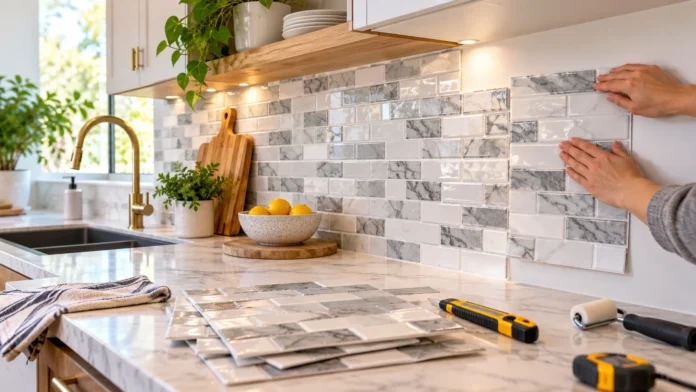
Peel and stick tile has become a popular home improvement option for homeowners who want to update their floors, kitchens, or bathrooms without spending money on extensive renovations. These self-adhesive tiles offer an affordable way to refresh outdated surfaces while avoiding some of the complicated installation steps associated with traditional tile. With different colors, patterns, and finishes available, they can complement many interior design styles.
However, peel and stick tiles are not suitable for every surface or room. Their performance depends on material quality, surface preparation, moisture exposure, and daily foot traffic. Understanding peel and stick tile pros, cons, and best uses can help you determine whether this flooring or wall covering is appropriate for your home. This guide explains the main advantages, limitations, installation requirements, maintenance needs, and practical applications of adhesive tiles.
What Is Peel and Stick Tile and How Does It Work?
Peel and stick tile is a decorative flooring or wall covering that comes with an adhesive backing designed to attach directly to a compatible surface. Unlike traditional ceramic tile, many self-adhesive products do not require separate mortar or specialized installation equipment. The protective backing is removed before the tile is positioned and pressed into place.
These tiles are manufactured using different materials, including vinyl, composite products, and certain lightweight decorative surfaces. Some imitate natural stone, ceramic, wood, or patterned tiles, allowing homeowners to achieve different appearances without purchasing more expensive materials. Products designed for floors may differ significantly from those intended for kitchen backsplashes or bathroom walls.
The adhesive bonds to the prepared surface when the tile is installed according to the manufacturer’s instructions. Proper adhesion depends on cleanliness, dryness, temperature, and the condition of the underlying material. Although installation appears simple, understanding these requirements is important for preventing loose edges, uneven surfaces, and premature wear.
Different Types of Peel and Stick Tiles
Peel and stick vinyl floor tiles are among the most common self-adhesive products available for residential interiors. They are usually lightweight and offered in square or rectangular formats that imitate stone, ceramic, or wood. Many homeowners select them for small room updates because they can be installed without conventional tile-setting materials.
Decorative peel and stick backsplash tiles are designed primarily for suitable vertical surfaces rather than floors. These products may feature raised textures, printed designs, or reflective finishes that imitate traditional kitchen tiles. Their durability and resistance to heat or moisture vary, making it important to verify whether a specific product is approved for the intended location.
Some adhesive tile systems use thicker composite materials or specialized construction to improve appearance and performance. Products may also differ in whether seams require particular treatment or additional finishing components. Comparing material specifications, intended uses, warranty conditions, and installation guidelines helps homeowners select tiles that match their expectations.
Advantages of Peel and Stick Tile for Homeowners
One of the biggest advantages of peel and stick tile is its straightforward installation process. Many products are designed for basic DIY projects, reducing the need for specialized equipment or professional tile-setting experience. Homeowners can often update suitable surfaces with measuring tools, cutting equipment, and careful preparation.
Affordability is another major benefit because many adhesive tile products cost less than traditional tile installations. The potential savings come from lower material prices and reduced installation labor. This makes peel and stick flooring attractive for smaller renovation projects, temporary decorative updates, or rooms where homeowners want a fresh appearance without extensive construction.
Design flexibility also contributes to the popularity of self-adhesive tiles. Homeowners can choose patterns inspired by marble, terrazzo, wood, concrete, or traditional geometric designs. These options make it easier to coordinate floors and walls with existing furniture, cabinets, and decorative accessories while keeping renovation plans relatively simple.
Disadvantages of Peel and Stick Tile to Consider
Despite their convenience, peel and stick tiles have limitations that homeowners should understand before installation. Some lower-cost products are more vulnerable to scratches, dents, and surface wear than durable ceramic or porcelain flooring. Their performance varies considerably depending on material thickness, protective coatings, and the amount of daily use.
Adhesive failure is another potential disadvantage, especially when tiles are installed over dusty, uneven, damp, or unsuitable surfaces. Poor adhesion can cause corners to lift, seams to separate, or individual pieces to move. Changes in temperature and moisture conditions may also affect certain products, particularly when installation requirements are ignored.
Peel and stick tiles may not provide the same long-term durability or moisture protection as properly installed conventional tile systems. Replacing damaged pieces can sometimes create visible differences in color or texture. Homeowners should consider these limitations carefully when choosing materials for busy areas or spaces exposed to frequent moisture.
Best Uses for Peel and Stick Tile Around the Home
Peel and stick tile works best in locations where the underlying surface meets manufacturer requirements and environmental conditions remain suitable. Low-traffic rooms, small decorative areas, and selected residential floors can be good candidates. Choosing the correct product for each application is essential because wall tiles and floor tiles are not interchangeable.
Laundry rooms, closets, and certain home offices may benefit from adhesive flooring when the surface is stable, dry, and properly prepared. Decorative backsplash products can also refresh suitable kitchen or bathroom walls. These applications allow homeowners to make visible design improvements without undertaking extensive demolition or structural changes.
However, peel and stick tile should not automatically be used in showers, wet rooms, outdoor spaces, or areas exposed to extreme temperatures. These environments can exceed the product’s intended performance limits. Reviewing installation restrictions before purchasing helps avoid costly mistakes and ensures that the selected material suits the room.
Using Peel and Stick Tile in Kitchens
Kitchens are a popular location for peel and stick tile because homeowners often want affordable ways to refresh outdated floors and walls. Decorative backsplash panels can introduce color and texture behind countertops, while suitable flooring products may improve the appearance of a kitchen floor. Their practical value depends on heat resistance, moisture exposure, and daily activity.
When installing adhesive backsplash tiles, pay attention to their approved distance from cooking appliances and other heat sources. Products that tolerate ordinary kitchen splashes may not withstand direct heat or repeated exposure to high temperatures. For flooring applications, choose materials rated for foot traffic, cleaning requirements, and the expected use of the space.
Kitchen surfaces should be cleaned thoroughly before installation because grease and residue can interfere with adhesive bonding. Smooth, dry, properly prepared substrates generally provide better results than textured or damaged surfaces. Following product-specific instructions helps maintain an attractive finish while reducing problems with lifting edges and premature wear.
Can You Use Peel and Stick Tile in Bathrooms?
Peel and stick tile can be suitable for certain bathroom applications when the selected product is specifically approved for moisture-prone environments. Bathroom vanity backsplashes and some dry-area floors may be appropriate locations. However, the material must tolerate the humidity, temperature changes, and occasional splashes expected in the room.
Adhesive tiles should not be assumed waterproof simply because their surface resists small amounts of water. Moisture can reach the underlying material through seams, edges, or damaged sections. In shower enclosures and other continuously wet areas, an approved waterproofing system is essential, and ordinary decorative adhesive tiles are usually unsuitable.
Before using peel and stick flooring in a bathroom, inspect the existing surface for moisture damage and check the manufacturer’s recommendations. Proper preparation and ventilation help support adhesion and reduce the likelihood of trapped moisture. If there are existing leaks, address them before installing new decorative coverings.
Peel and Stick Tile vs. Traditional Ceramic Tile
Peel and stick tile and traditional ceramic tile offer different benefits depending on project requirements and available budgets. Adhesive products generally require fewer installation materials and may be easier for beginners to handle. Ceramic tiles typically involve mortar, grout, and more extensive preparation, especially when used on floors or in moisture-prone environments.
Ceramic and porcelain tiles are often preferred for their long-term durability, surface hardness, and suitability for properly designed wet-area systems. Peel and stick products can be useful for decorative updates, but their performance depends more heavily on adhesive quality and substrate conditions. Neither option should be selected without considering the intended application.
Cost is another important difference because conventional tile installation often involves higher labor expenses. However, a durable ceramic installation may provide better long-term value in certain high-use locations. Comparing expected lifespan, maintenance, installation requirements, and replacement costs helps homeowners choose the material that best suits their needs.
Peel and Stick Tile vs. Luxury Vinyl Flooring
Peel and stick vinyl tiles and luxury vinyl flooring share certain design characteristics, but their installation methods can differ considerably. Self-adhesive tiles attach directly to a compatible substrate, while many luxury vinyl planks use click-lock or other installation systems. These differences affect preparation requirements, repair methods, and product performance.
Luxury vinyl products are available in different thicknesses and wear-layer specifications, with some designed for substantial residential traffic. Peel and stick tiles can also vary in durability, making direct comparisons dependent on the individual products. Thickness alone does not determine quality because construction, protective layers, and installation conditions also matter.
Homeowners comparing these options should consider room size, expected traffic, moisture exposure, and flooring warranties. A product that works well in a small closet may not be suitable for a frequently used kitchen. Reviewing manufacturer performance ratings and installation guidelines provides a more reliable comparison than judging materials by appearance alone.
How Much Does Peel and Stick Tile Cost?
Peel and stick tile prices vary according to material quality, design, thickness, brand, and intended application. Basic self-adhesive vinyl floor tiles in the United States may cost approximately $1 to $3 per square foot. Premium decorative products and specialty backsplash panels can cost considerably more, particularly when they feature thicker materials or detailed finishes.
For example, covering a 100-square-foot floor with tiles costing $2 per square foot would require approximately $200 in basic material expenses. This estimate excludes additional tiles for cutting waste, surface preparation, tools, and any necessary repairs. Total project costs may increase when the underlying floor needs leveling or other improvements before installation.
Professional installation can add labor expenses, although some homeowners choose adhesive tiles specifically for suitable DIY projects. Prices also vary between local retailers and online suppliers. Comparing coverage, product specifications, and preparation costs helps create a more realistic renovation budget than focusing only on the advertised package price.
How to Prepare a Surface for Peel and Stick Tile
Proper preparation is one of the most important factors influencing how well peel and stick tile performs over time. Begin by confirming that the existing surface is compatible with the selected product. Many adhesive floor tiles require a clean, dry, smooth, and structurally sound substrate without loose material or significant unevenness.
Remove dust, grease, and debris using appropriate cleaning methods before allowing the surface to dry completely. Existing paint, coatings, or flooring materials may require special preparation or approved primers. Avoid installing tiles over active moisture problems, loose flooring, or surfaces that do not meet the manufacturer’s adhesion requirements.
For older floors, consider whether existing materials could contain asbestos or whether disturbing painted surfaces could create other hazards. Do not sand, scrape, or remove potentially hazardous materials without appropriate professional assessment. Preparing the substrate correctly helps establish stronger adhesion and reduces the likelihood of visible imperfections after installation.
How to Install Peel and Stick Tile Step by Step
Start by measuring the installation area and planning the tile layout before removing any protective backing. Establish straight reference lines according to the product instructions, and consider how cut pieces will appear around room edges. A balanced layout helps prevent narrow, awkward sections and creates a more professional finished appearance.
Once the layout is established, remove the backing from the first tile and position it carefully against the prepared surface. Press it into place using the manufacturer’s recommended method, then continue installing adjacent tiles while maintaining alignment. Avoid stretching flexible materials or allowing dust to contact exposed adhesive during installation.
Trim edge pieces using suitable cutting tools and follow the product’s requirements for gaps, rolling, or additional adhesion pressure. Some flooring products require a specified roller or bonding procedure to achieve proper contact. Before using the finished area, observe any recommended waiting period and verify that all edges remain secure.
Common Peel and Stick Tile Installation Mistakes
Installing peel and stick tile on an uneven or dirty surface is one of the most common causes of poor results. Dust, old adhesive, grease, and loose coatings can prevent proper bonding. Surface imperfections may also become visible through thin flooring products, making careful preparation essential for a smooth appearance.
Another mistake involves ignoring room temperature and humidity requirements during installation. Some adhesive systems need specific environmental conditions to achieve reliable performance. Applying tiles in a space that is too cold, hot, or damp may weaken adhesion and contribute to lifting edges or separated seams.
Incorrect measurements and rushed placement can also create uneven patterns and unnecessary material waste. Once certain adhesive tiles are pressed firmly into position, repositioning may be difficult without damaging them. Planning the layout, following product instructions, and checking each row before continuing helps reduce these avoidable problems.
How Long Does Peel and Stick Tile Last?
The lifespan of peel and stick tile depends on product construction, installation quality, foot traffic, and environmental conditions. Some inexpensive decorative products are intended mainly for temporary improvements, while higher-quality options may provide several years of service. There is no single lifespan that applies to every adhesive tile.
Heavy furniture, frequent movement, moisture exposure, and harsh cleaning products can affect the appearance and condition of certain materials. The quality of the underlying surface is also important because loose or unstable substrates may cause tiles to fail prematurely. Properly installed products generally perform better than those applied without adequate preparation.
Manufacturer warranties can provide useful information about expected performance, although coverage terms and exclusions vary considerably. A long warranty does not mean the tile will remain undamaged under every condition. Regular cleaning, prompt repairs, and appropriate use help homeowners maintain adhesive tile installations for as long as practical.
How to Clean and Maintain Peel and Stick Tiles
Regular cleaning helps keep peel and stick tile surfaces attractive while reducing dirt and debris that can contribute to wear. For suitable flooring products, sweeping or vacuuming with an appropriate attachment removes loose particles. Follow with cleaning methods recommended by the manufacturer to avoid damaging the finish or adhesive connections.
Excessive water should generally be avoided unless the product instructions specifically permit the cleaning method. Water left around seams may reach vulnerable areas and contribute to adhesion problems. Abrasive scrubbers, harsh solvents, and incompatible cleaning agents can also damage decorative layers or protective coatings.
Inspect tile edges periodically for curling, gaps, or visible movement, especially in frequently used areas. If a tile becomes damaged, follow the manufacturer’s recommendations for replacement rather than repeatedly forcing it back into place. Addressing underlying moisture or substrate problems helps prevent the same issue from affecting replacement pieces.
When Peel and Stick Tile Is Not the Best Choice
Peel and stick tile is not suitable for every renovation project, particularly when the area experiences substantial water exposure or demanding physical conditions. Shower floors, permanently wet surfaces, and exterior installations typically require specialized materials and construction systems. Using decorative adhesive tiles outside their approved applications can lead to premature failure.
Highly uneven floors, unstable subfloors, and surfaces with ongoing moisture problems are also poor installation candidates. Adhesive tiles cannot correct structural movement, damaged flooring, or significant level differences. These issues need appropriate repairs before any new finish is installed, regardless of whether the selected material is inexpensive or premium.
For long-term installations in heavily used spaces, ceramic tile or another suitable flooring system may provide better value. The choice depends on durability expectations, maintenance requirements, and the property’s existing conditions. Understanding when to choose an alternative helps homeowners avoid spending money on a product that cannot meet their needs.
Conclusion
Peel and stick tile offers an affordable and convenient way to update suitable floors, kitchen backsplashes, and decorative wall areas. Its simple installation process, variety of designs, and relatively low material costs make it attractive for beginner-friendly home improvement projects. However, successful results depend on selecting appropriate products and preparing surfaces carefully.
The main disadvantages include potential adhesive failure, limited suitability for wet environments, and varying durability compared with traditional flooring materials. High-traffic areas and uneven substrates may require more substantial solutions. Following manufacturer instructions and understanding the limitations of each product helps prevent common installation and maintenance problems.
Whether you are refreshing a small room or planning a larger home makeover, consider how the space will be used before choosing adhesive tiles. Compare materials, costs, expected lifespan, and ongoing maintenance needs to make an informed decision. With proper selection and installation, peel and stick tile can provide an attractive decorative improvement that suits your budget and interior design preferences.
FAQs
What are the main advantages of peel and stick tile?
Peel and stick tile offers relatively easy installation, affordable material options, and many decorative designs. It can refresh suitable floors or walls without conventional tile mortar, making it useful for certain DIY projects.
What are the disadvantages of peel and stick tile?
Common disadvantages include possible adhesive failure, limited suitability for wet areas, and variable resistance to scratches or heavy traffic. Some products may also have shorter lifespans than conventional flooring materials.
Can peel and stick tiles be used in bathrooms?
Certain peel and stick tiles are approved for bathroom floors or vanity backsplashes. However, ordinary adhesive tiles should not replace waterproofing systems in showers or other continuously wet areas.
How long do peel and stick tiles last?
Peel and stick tiles may last several years when installed correctly in suitable conditions. Their lifespan depends on material quality, foot traffic, moisture exposure, maintenance, and the condition of the underlying surface.
Is peel and stick tile better than ceramic tile?
Peel and stick tile is often easier and less expensive to install, while ceramic tile generally offers greater durability for demanding applications. The best choice depends on the room, budget, and expected performance.